How to Avoid Regret Buying the Xbox Nano Controller
How to Avoid Regret Buying the Xbox Nano Controller The Xbox Nano Controller is $49.99, pocket-sized, and open for pre-order. The headlines make it sound like…
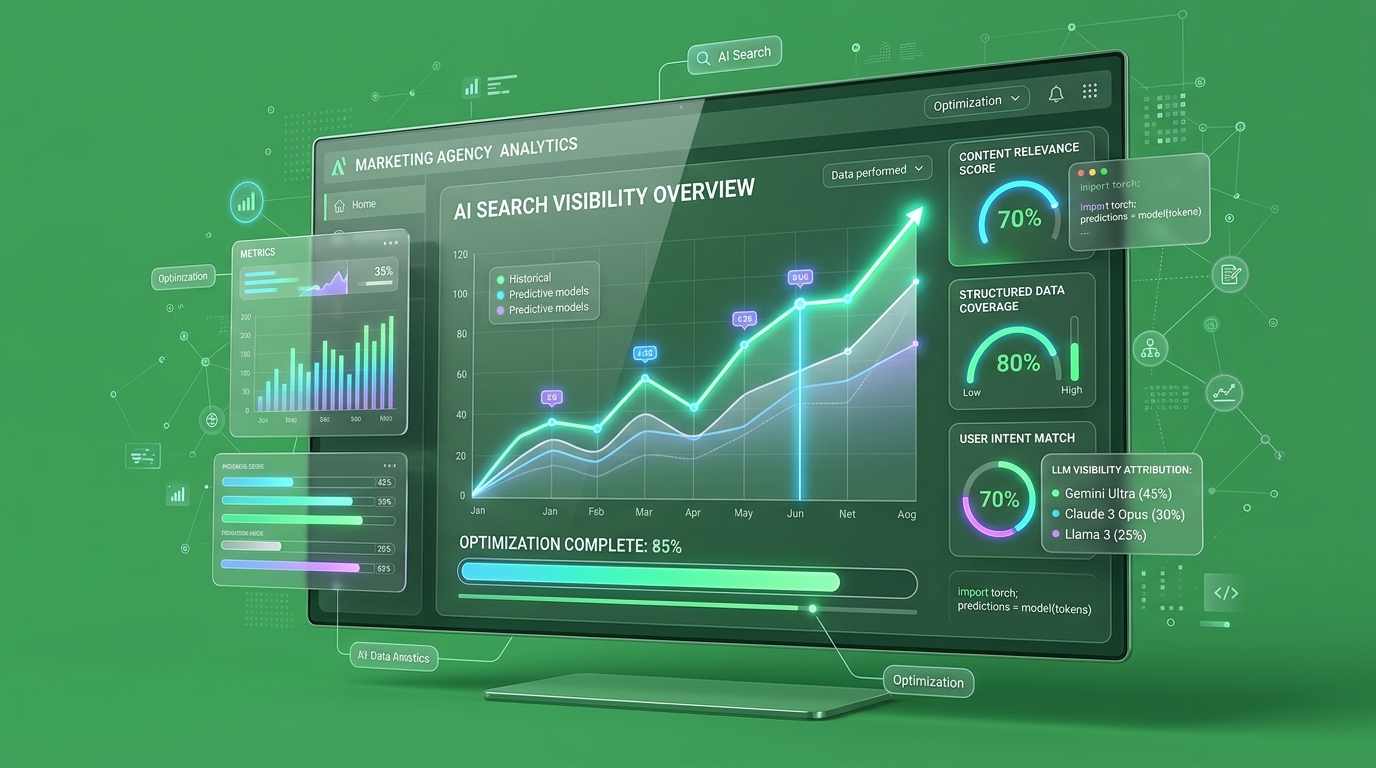
You’ve been doing SEO. You’ve written the blogs. You’ve built the backlinks. You’ve chased the rankings.
And your traffic is still dropping. Not because your strategy was wrong it was right for a version of search that is now being replaced at speed. The problem is that the rules changed while most businesses were still playing the old game. And if you haven’t adapted your AI search optimization approach by now, you’re not just behind you’re invisible in the places where your next customers are actually looking.
Here’s what’s really happening, and what you need to do about it.
Your content is no longer just for humans or Google’s algorithm. Today, it faces three readers: real users, traditional search engines, and powerful AI systems. While humans scroll and Google ranks, AI engines extract, summarize, and cite. Most websites still write only for the first two. The brands winning right now are writing for all three especially the AI reader that decides whether your content gets shown or completely ignored.
This isn’t a theory. It’s in the data.
According to SparkToro’s 2024 zero-click search study, for every 1,000 Google searches made in the US, only 360 result in a click to a website outside of Google’s own ecosystem. That means over 60% of searches end on the results page itself with no visit, no session, no conversion opportunity for anyone.
And that was before AI Overviews became standard. Since then, it’s gotten sharper. As of March 2025, only 40.3% of U.S. Google searchers clicked any organic result down from 44.2% the previous year. The clicks aren’t gone, but they’re being redistributed. And a growing share is going to brands that understood the shift early. This is the real threat. Not Google dying Google becoming the destination, not the doorway.
The question isn’t whether this is happening. It’s whether your brand shows up inside the answer or gets cut out entirely.
Here’s the part nobody’s talking about clearly enough.
AI search isn’t one thing. It’s four distinct surfaces, each with its own rules:
Each of these surfaces is a separate battlefield. Traditional SEO optimizes for one of them and even that one has changed significantly.
Old SEO goal: rank on page one.
New goal: get cited in the answer.
These are not the same. They require different content, different structure, and a fundamentally different understanding of why AI engines pick certain sources over others. Traditional search algorithms are designed to evaluate page authority, backlink profiles, keyword relevance, and on-page signals. AI search engines operate differently. They’re looking for clarity, credibility, structure, and entity authority. They’re asking: does this content give a clear, authoritative answer that a language model can parse, extract, and cite with confidence?
Most business websites don’t. Not because the content is bad but because it wasn’t built with AI readability in mind.
BrightEdge’s survey of 750+ marketing professionals found that 68% of organizations are actively changing their strategies to adapt to AI search with SEO and digital marketing teams carrying most of that burden. The businesses not in that 68% aren’t just behind on a trend. They’re building equity in a channel that’s shrinking.
Ranking and being cited are two different games. Most brands are only playing one.
This is the uncomfortable one.
Most content is written for humans to scroll and for algorithms to rank. That combination used to be enough. It isn’t now because now there’s a third reader in the room: the AI engine deciding whether to surface, cite, or ignore your content entirely.
AI engines don’t scan for keywords. They extract meaning. They identify:
This means a 2,000-word blog stuffed with secondary keywords but written as one giant wall of opinion is effectively invisible to AI search. Meanwhile, a 600-word piece structured with clear headings, direct answers, and specific supporting data gets cited consistently.
The length of your content matters less than its ability to give a clean, extractable answer.
This is one of the reasons we restructure content as part of our content marketing strategy work at “TheMayk” not just for keyword optimization, but for AI discoverability. The two are now inseparable.

If you haven’t heard “entity authority” yet, here’s the short version.
AI search engines and increasingly, Google itself don’t just evaluate individual pages. They evaluate entities: the people, brands, businesses, concepts, and topics associated with your website. When Google or an AI engine builds an understanding of your site, it’s building a knowledge graph: what you are, what you’re about, who you’re associated with, and whether you’re a credible source in a given domain.
Brands with strong entity authority get cited. Brands without it don’t — regardless of how much content they publish.
How do you build entity authority? Four ways:
Entity authority isn’t built overnight. But it compounds. Start now and you’re building an asset. Wait another six months and you’re chasing competitors who already have it.
Let’s get specific. This is the part most blogs skip.
Pull your top 20 traffic pages and run them through this filter: Does each page answer a specific question directly, in the first 100 words? Does it use structured headers that a language model could extract as a standalone point? Does it contain a direct, quotable claim supported by a data point or specific example?
If the answer is no on most of them your content library needs restructuring before more volume helps you.
Use Semrush or Ahrefs to filter keywords you currently rank for and identify which ones trigger AI Overviews. For those queries, your traditional organic ranking is already being displaced. Rewrite those pages specifically for AI citation: shorter answers, more direct structure, clearer supporting data.
Pick two or three core topics your business genuinely owns. Create a cluster of content around each: a pillar piece, four to six supporting pieces, and a clear internal link structure between them. This is how AI engines recognize topical authority and it’s how you get cited on the queries that matter in your space.
FAQ schema. How-to schema. Article schema. These are the signals that tell AI crawlers what type of content is on the page and how to categorize it. Without this, AI engines are guessing. With it, you’re guiding them.
Get cited in industry publications. Update your Google Business Profile. Create and maintain a Wikipedia entry if your brand or its founders are notable enough. Get mentioned in podcasts, round-up posts, and aggregator sites. Every off-site mention builds the knowledge graph around your brand. And that graph is exactly what AI engines consult when deciding whose content to surface.
This is the kind of work we run through our AI-powered content creation and predictive analytics services because knowing which topics to own, and which queries are shifting to AI-driven results, changes everything about where you put your effort.
It’s speed.
Most businesses are waiting for AI search to “settle” before they invest in adapting. They’re waiting for a clear winner between Google AI Mode, ChatGPT Search, and Perplexity. They’re waiting for best practices to crystallize.
That’s the wrong move.
The brands winning in AI search right now didn’t wait. They built entity authority while it was cheap to do so. They restructured their content when there was no competition for AI citations. They ran the technical foundations schema, structured data, clear topical clusters before AI Overviews became a threat to their traffic.
We already see this with e-commerce. BrightEdge data from the 2025 holiday season showed direct referral traffic from AI engines like ChatGPT and Perplexity to e-commerce brands exploded by 752% year-over-year. That traffic went somewhere. It went to brands that were already optimized for AI discovery.
The window to build early-mover advantage in AI search is closing. It hasn’t closed yet but it will.
Before you write another word of content, run this audit:
If more than three of these are a no, your current organic strategy has a structural gap that more content volume won’t fill.
This is exactly where we start with new clients at “TheMayk” mapping the gap between what exists and what AI engines need to see. You can explore how we approach conversion-focused SEO and AI search readiness across our service pages.
You should also read our related pieces on 9 strategies to thrive in an AI search-driven SEO world and how to adapt your SEO strategy for AI search dominance in 2026 both go deep on the execution details.
The brands that will own AI search visibility over the next two years aren’t necessarily the ones with the most content or the biggest budgets. They’re the ones who understood the new rules early and executed against them consistently. This isn’t about chasing a trend. It’s about building the kind of brand authority that AI engines recognize, trust, and cite on the queries that turn into revenue. If you’re not sure where your brand stands in the shift to AI search, that uncertainty is the starting point.
Let’s find out exactly where you’re visible, where you’re not, and what it would take to change that. Book a free strategy session at www.themayk.com.
Stop guessing. Start growing.
Stop chasing trends and start building an automated sales engine that stays personal, stays on, and actually closes.
How to Avoid Regret Buying the Xbox Nano Controller The Xbox Nano Controller is $49.99, pocket-sized, and open for pre-order. The headlines make it sound like…
Is the Xbox Nano Controller Actually Comfortable? You’ve read the headlines: five inches, 3.5 ounces, $49.99, all 18 inputs. Everyone’s calling it cute. Nobody’s answered the…
How to Master Social Media Marketing Fast You are posting three times a week on Instagram and LinkedIn. Your designer makes pristine templates, and your team…
How we use your info: Used strictly to review your project, prepare tailored insights, and reach out for a 1-on-1 strategy call. Zero spam, zero shared data.