
How to Avoid Regret Buying the Xbox Nano Controller
How to Avoid Regret Buying the Xbox Nano Controller The Xbox Nano Controller is $49.99, pocket-sized, and open for pre-order. The headlines make it sound like…
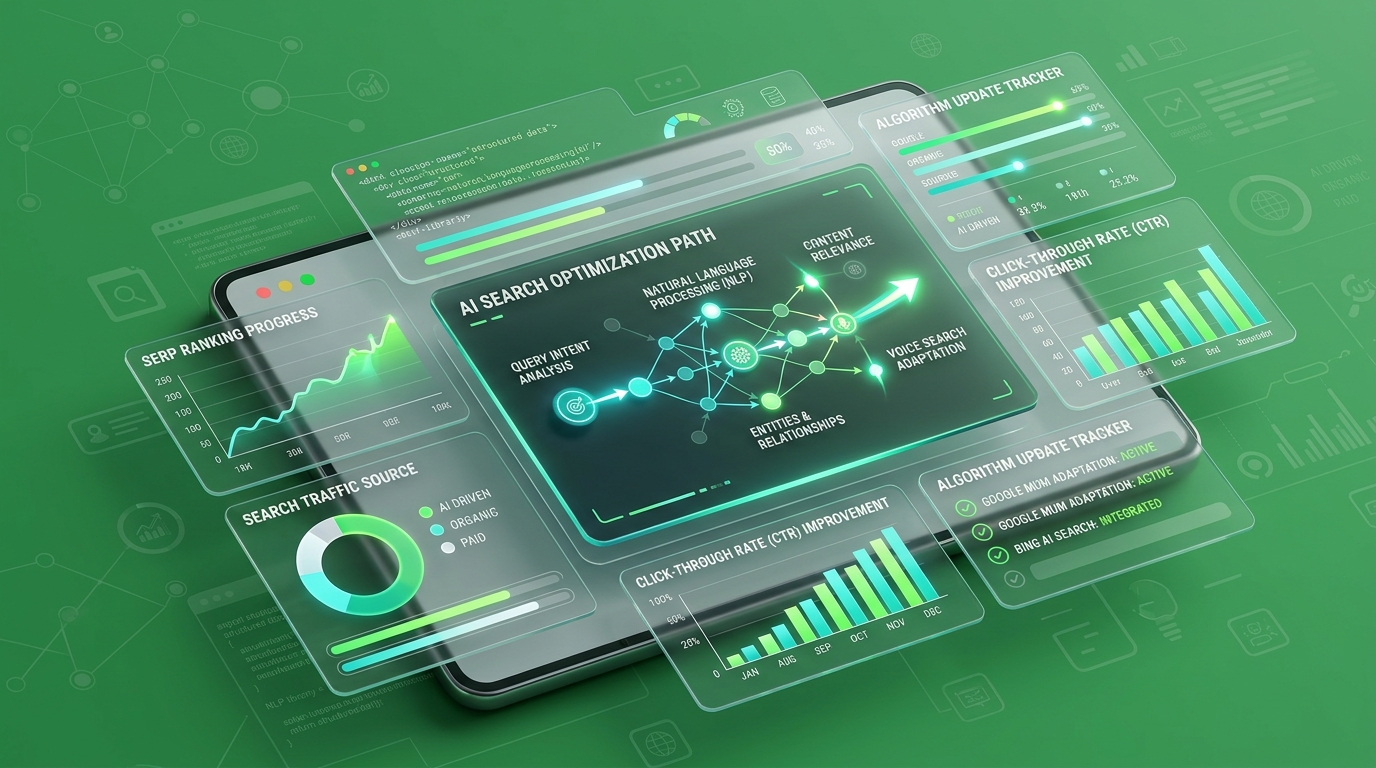
You’ve been doing SEO the right way. You’ve written the blogs. You’ve earned the backlinks. You’ve chased Position 1 like it was the finish line.
And your traffic is dropping anyway.
That’s not a coincidence. The search engine you optimized for in 2022 the one that rewarded the best-ranked page with a flood of clicks has been replaced by something completely different. And most businesses are still playing by the old rules.
The era of traditional SEO is ending. With AI Overviews stealing clicks and keeping users on Google, simply ranking on page one is no longer enough. Brands that get cited in AI summaries enjoy up to 120% more organic traffic than those that don’t. This fundamental shift demands a new approach: creating clear, authoritative, and well-structured content designed for both AI extraction and human value. The winners in 2026 aren’t fighting for positions they’re earning trust as the definitive source.
In March 2025, the Pew Research Center tracked nearly 69,000 Google searches from 900 real users. What they found should fundamentally change how you think about search.
When a Google AI Overview appeared at the top of the results, users clicked on a traditional organic link just 8% of the time. Without an AI Overview? That number was 15%. A near 50% drop in clicks just from the presence of an AI-generated summary. And the links inside the AI summaries themselves? Only 1% of users clicked them. Google isn’t a traffic source anymore. It’s becoming the destination. It reads your content, summarizes it, and keeps the user inside its own ecosystem. Your blog post becomes the raw material. Google takes the finished product.
That’s what’s happening. The question is what you do about it.
Here’s the uncomfortable part. Most agencies and in-house teams are still optimizing the same way they were three years ago. Write a blog. Target a keyword. Build some links. Aim for Page 1.
That strategy isn’t dead. But it’s not enough anymore and for certain types of content, it’s actively wasteful.
Seer Interactive’s analysis of 5.47 million queries found that organic click-through rates on AI Overview queries dropped 61% compared to searches without them. Brands that weren’t cited in the AI summary got crushed. Brands that were cited earned roughly 120% more organic clicks per impression than uncited ones on the same query.
Read that again. The gap between being cited and not being cited is 120% more clicks.
This is no longer about ranking first. It’s about being the source that AI trusts enough to quote. That’s a fundamentally different game. And most businesses haven’t started playing it yet.
Here’s the uncomfortable part. Most agencies and in-house teams are still optimizing the same way they were three years ago. Write a blog. Target a keyword. Build some links. Aim for Page 1. That strategy isn’t dead. But it’s not enough anymore and for certain types of content, it’s actively wasteful.
Seer Interactive’s analysis of 5.47 million queries found that organic click-through rates on AI Overview queries dropped 61% compared to searches without them. Brands that weren’t cited in the AI summary got crushed. Brands that were cited earned roughly 120% more organic clicks per impression than uncited ones on the same query.
Read that again. The gap between being cited and not being cited is 120% more clicks.
This is no longer about ranking first. It’s about being the source that AI trusts enough to quote. That’s a fundamentally different game. And most businesses haven’t started playing it yet.
Here’s what most people misunderstand about how AI Overviews work.
They don’t pick content because it ranks highest. They pick content because it reads as the most authoritative, structured, and trustworthy answer to the query. Google’s AI is essentially doing what a smart researcher does when they need to brief someone on a topic quickly. They don’t grab the first result. They look for the source that explains the concept most clearly, cites evidence, and sounds like it actually knows what it’s talking about.
Most business blogs aren’t written that way. They’re written for keyword density and length targets not to actually answer a question better than anyone else on the internet.
That’s the gap. Content that earns AI citations is content that:
The irony is that the best content for AI search is also the best content for humans. If your blog reads like a real answer from a real expert, AI notices. If it reads like it was built to fill a word count, AI skips it.
This is not a rebrand of old SEO with new buzzwords. The tactics are genuinely different.
AI summarizers don’t read your article the way a human does. They look for structured answers typically in the first 100 words of a section, under a clearly descriptive heading. If your article buries the answer in paragraph four, it won’t get cited.
Every H2 subheading should function as a complete question-and-answer unit. The heading asks. The first two sentences answer. Everything after that adds depth.
AI Overviews trigger most frequently on conversational, longer queries. According to Pew’s data, searches with 10 or more words triggered AI summaries 53% of the time. Searches with one or two words? Just 8%. That changes your keyword strategy completely. You’re not just targeting “AI search optimization.” You’re targeting “how do I get my content cited in Google AI Overviews” and “why is my SEO traffic dropping in 2026.” The long, conversational query is where AI lives. Get there.
One strong article on a topic isn’t enough anymore. AI systems favor sources that demonstrate deep, consistent expertise across a subject. That means building a content cluster a hub of interconnected, specific pieces that cover every dimension of your topic.
Our content marketing strategy work at “TheMayk” is built around exactly this model. One pillar piece supported by multiple supporting articles, all cross-linked and built around the same core topic. When AI reads your site, it should encounter a body of work not a single well-ranked page.
This is the shift most people haven’t made yet. Getting cited in an AI Overview drives roughly 120% more clicks than not being cited even if you’re ranking in the same search. That means your goal isn’t just visibility. It’s trustworthiness.
Trustworthiness signals in AI search include: named authors with demonstrated credentials, original data or case studies, external links to authoritative sources, and consistent publication of in-depth content over time. These aren’t new signals but they’re now weighted more heavily than keyword repetition.
Traditional SEO metrics are increasingly misleading. Position 1 rankings mean less when 48% of searches now display an AI Overview above organic results, according to BrightEdge’s 2026 data. If your dashboard is showing impressions up and clicks down, that’s not a coincidence that’s AI Overviews doing exactly what they’re designed to do.
The metrics that matter now: branded search volume, direct traffic, and critically whether your content is being cited in AI responses. Tools like Google Search Console now provide some visibility into this. Use them.
This isn’t theoretical. The data from Seer Interactive’s 2026 update is clear: brands cited in AI Overviews earn dramatically more clicks than uncited brands on the same query. The gap is compounding. The businesses winning search right now did one thing differently. They stopped asking “how do I rank?” and started asking “why would AI cite me?” That question leads to better content, more structured writing, stronger topical authority, and a fundamentally more credible brand online. It also happens to serve humans better which was always the point.
At “TheMayk”, our SEO and organic growth work is now built around this exact framework. We audit how content is structured for AI extraction, identify the question-based queries your audience actually uses, and build content architecture that positions our clients as the cited source not just another result in the list.
The brands still writing for Position 1 in isolation are going to have a hard year. The brands building for citation authority are going to compound.
The rules of search have changed forever. Ranking first no longer guarantees traffic being cited by AI does. Businesses that adapt by creating clear, authoritative, and structured content will thrive, while those clinging to outdated SEO tactics will fade.
At “TheMayk”, we help brands make this shift and become the trusted source AI and humans choose. The future belongs to those who optimize for citation, not just clicks.
Let’s build an AI-ready content strategy that earns citations and drives real traffic. Book a free strategy call at www.themayk.com.
How to Avoid Regret Buying the Xbox Nano Controller The Xbox Nano Controller is $49.99, pocket-sized, and open for pre-order. The headlines make it sound like…
Is the Xbox Nano Controller Actually Comfortable? You’ve read the headlines: five inches, 3.5 ounces, $49.99, all 18 inputs. Everyone’s calling it cute. Nobody’s answered the…
How to Master Social Media Marketing Fast You are posting three times a week on Instagram and LinkedIn. Your designer makes pristine templates, and your team…
How we use your info: Used strictly to review your project, prepare tailored insights, and reach out for a 1-on-1 strategy call. Zero spam, zero shared data.