
How to Avoid Regret Buying the Xbox Nano Controller
How to Avoid Regret Buying the Xbox Nano Controller The Xbox Nano Controller is $49.99, pocket-sized, and open for pre-order. The headlines make it sound like…
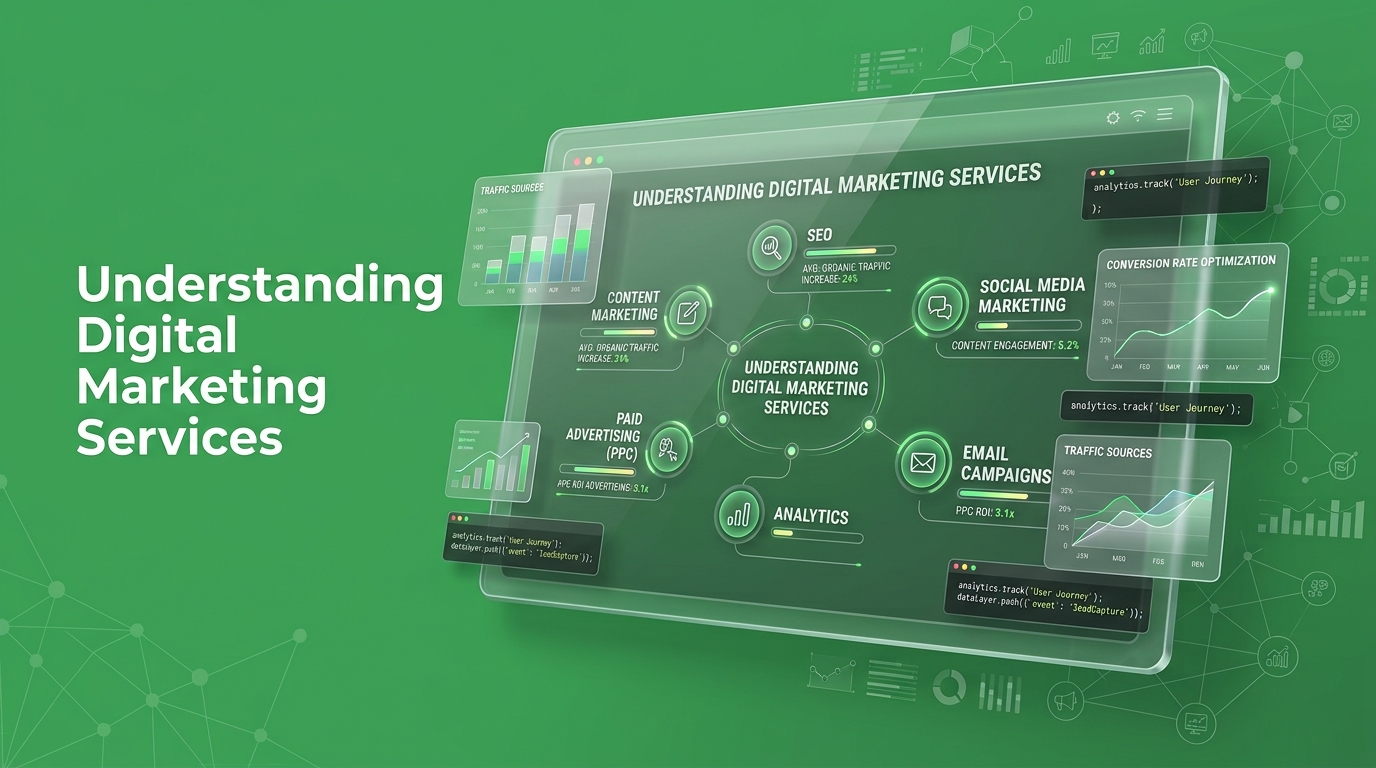
You have probably bought at least one digital marketing service you couldn’t fully explain to a friend afterward. Whether it was SEO or a paid social package, paying invoices only to receive a report full of confusing numbers that don’t connect to your revenue is incredibly frustrating. The problem isn’t you—it’s an industry that sells services faster than it explains them, leaving business owners guessing where their budget should actually go.
To stop buying services on faith, you need a cohesive digital marketing framework that connects your marketing spend directly to business growth. In this article, we will break down the six essential pillars of digital marketing into plain English, show you what each one actually does, and explain how they are supposed to work together. By the end, you will know exactly which missing pieces your business needs to build a highly profitable strategy.
Successful marketing requires a synchronized ecosystem, not an unorganized collection of random service retainers. When you align marketing intel, organic growth, paid media, brand design, motion graphics, and artificial intelligence, your business builds a predictable engine for growth. Stop buying disconnected tools on faith alone. By understanding these six pillars, you can systematically diagnose your marketing bottlenecks, invest your budget with absolute clarity, and finally demand measurable business revenue growth.
Here’s the pattern we see constantly. A business owner gets a cold email about SEO, hires someone. A few months later, an ad rep offers to “manage” their Facebook. They say yes. Somewhere in there, a freelancer builds a landing page.
None of it was chosen. It accumulated.
Every one of those purchases might be a genuinely good service and the business still won’t grow, because nobody decided how they fit together. That’s not a marketing problem. It’s an understanding problem, and it’s more common than most agencies will admit.
The confidence numbers back this up. Constant Contact’s 2025 Small Business Now report, which surveyed 2,500 small business decision-makers, found that fewer than one in five now feel genuinely confident their marketing is working, even as spending and channel adoption climb higher every year. Budgets are going up. Confidence is going down.
You can be busy and still be lost. That gap between effort and clarity is almost never a talent problem or a budget problem. It’s a category problem nobody sat the business owner down and explained what they were actually buying.
“Digital marketing” isn’t one thing. It’s a label that got stretched over a dozen different disciplines data analysis, design, copywriting, ad buying, engineering because it was convenient shorthand for “stuff that happens online.” That convenience is exactly what makes it confusing to buy.
Here’s where it gets interesting: the businesses that struggle most aren’t the ones with no budget. They’re the ones buying disconnected pieces of a system without knowing it’s a system. An SEO retainer with no landing page strategy behind it is a slow leak. A paid ads budget with no analytics layer is a blindfolded bet.
This isn’t just a hunch. Constant Contact’s research found that acquiring new customers is the top challenge for 60% of small businesses surveyed, ahead of budget and time constraints combined which tells you the issue usually isn’t that businesses aren’t trying. It’s that the effort isn’t sequenced.
You can’t fix what you can’t name. So before you buy another service, it helps to know exactly which category it belongs to and what job it’s actually supposed to do.
Strip away the jargon and every legitimate digital marketing service falls into one of six buckets. Once you can name the bucket, you can judge whether you actually need it.
This is the category most businesses skip, and it’s the one that makes every other dollar honest. Business and website analytics, dashboard development, behavioral tracking, and funnel analysis all live here.
Without this layer, you’re guessing which channel is actually driving revenue. With it, you know exactly where the leaks are.
Search engine optimization, content marketing strategy, and organic social sit here. This is the slow-compounding category nobody gets rich in month one, but the traffic you earn here doesn’t disappear the day you stop paying for it.
That patience is exactly what makes it worth doing early, not late.
Google Ads and search campaigns, Facebook, Instagram, and TikTok ads, and marketplace advertising all fall here. This is the fastest lever in the entire list and the most expensive one to run on a broken foundation.
Paid media is a speed multiplier. It’s not a fix for a page that doesn’t convert.
Brand strategy, visual identity, website design, and content production all live under this pillar. Most people think of this as “the logo,” which undersells it badly.
Brand isn’t decoration. It’s the reason a stranger decides to trust you in the three seconds before they’d otherwise leave.
3D product visualization, branded animation, explainer videos, and immersive AR/VR experiences fall here. This category exists because attention is the scarcest resource in every channel above it, and a flat product photo loses to a product that moves.
For e-commerce and physical products, this is often the single highest-leverage upgrade nobody budgets for.
Chatbots and AI assistants, AI-powered content creation, predictive analytics, and personalization engines belong here. This isn’t a category on its own island it’s a layer that makes the other five faster and sharper.
Treat AI as an accelerant, not a strategist. It executes the plan. It doesn’t replace the person who made it.
You don’t need all six pillars running at full intensity on day one. You need them in the right order, and that order depends on where your business is actually stuck.
Every one of these decisions should be made with data, not a sales pitch from whoever called you last.
This is the exact exercise we run with every new client before they spend a dollar with us: figure out which pillar is actually broken, then sequence the fix instead of piling on more services. It usually takes one conversation to see where the gap is.
If you’ve been buying digital marketing services without a real answer for why, that’s fixable but not by adding a seventh one blind.
Stop guessing. Let’s figure out what your business actually needs. Explore our services at www.themayk.com or book a free strategy call and we’ll walk you through exactly where to start.
Digital marketing services are only as valuable as the strategy connecting them. Piling on random retainers will not fix a broken system; it just drains your budget. By understanding these six core pillars, you can stop guessing and start sequencing your growth. Take a hard look at your current marketing stack, identify the real gaps, and build a cohesive ecosystem that drives revenue instead of simply multiplying your business confusion.
Because in 2026, the difference between a “No” and a “Yes” isn’t your tech stack it’s the human strategy behind it. Let’s turn your digital ghost town into a conversion machine.
How to Avoid Regret Buying the Xbox Nano Controller The Xbox Nano Controller is $49.99, pocket-sized, and open for pre-order. The headlines make it sound like…
Is the Xbox Nano Controller Actually Comfortable? You’ve read the headlines: five inches, 3.5 ounces, $49.99, all 18 inputs. Everyone’s calling it cute. Nobody’s answered the…
How to Master Social Media Marketing Fast You are posting three times a week on Instagram and LinkedIn. Your designer makes pristine templates, and your team…
How we use your info: Used strictly to review your project, prepare tailored insights, and reach out for a 1-on-1 strategy call. Zero spam, zero shared data.