How to Avoid Regret Buying the Xbox Nano Controller
How to Avoid Regret Buying the Xbox Nano Controller The Xbox Nano Controller is $49.99, pocket-sized, and open for pre-order. The headlines make it sound like…
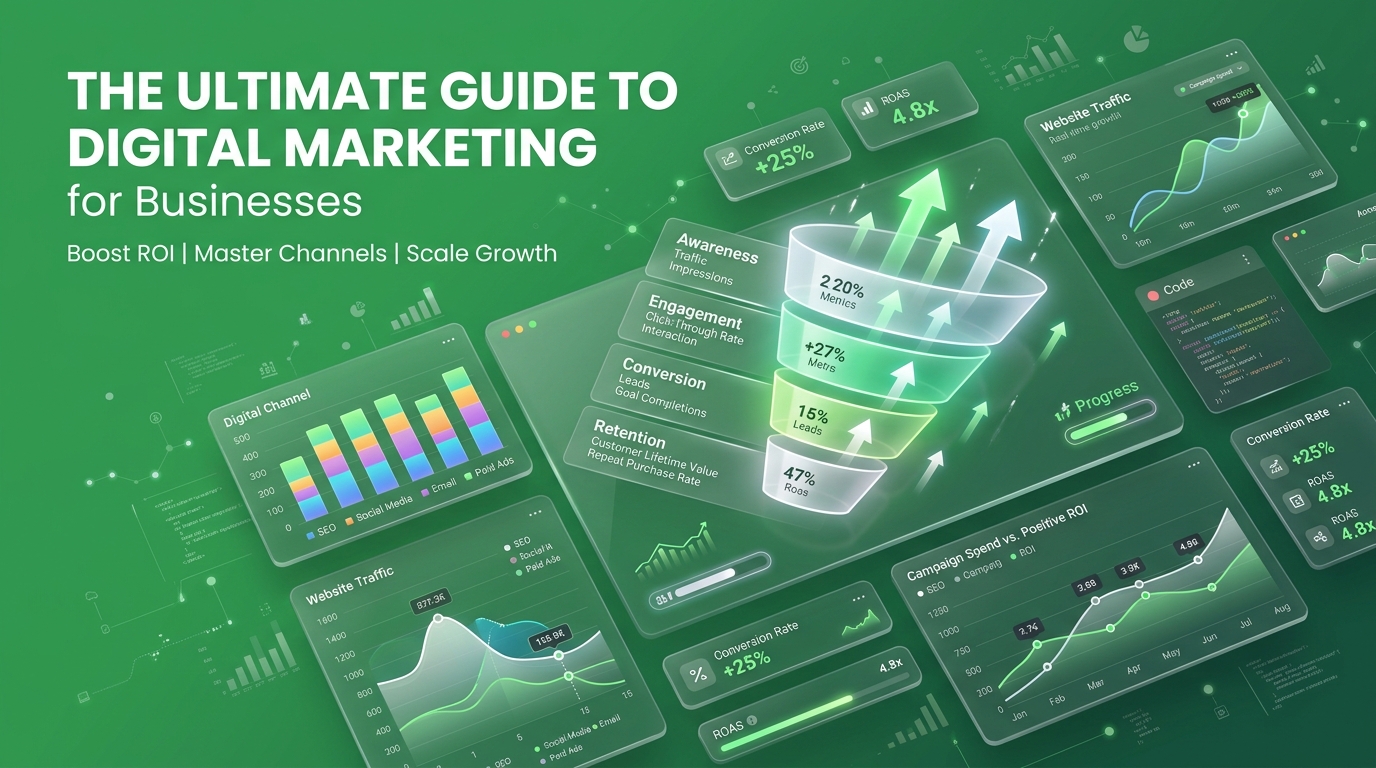
If you are already investing in a digital marketing strategy but seeing inconsistent results, it is easy to feel like you are throwing money into a black box. The truth is, guessing your way through isolated campaigns is costing you valuable time and revenue. To truly scale your business, you need a cohesive plan that turns disconnected tactics into a growth engine.
In this guide, we will break down how to bridge the gaps between your search engine optimization, paid media ads, and email marketing. You will learn how to unify your channels, align your team, and finally build an integrated framework that drives predictable, measurable results.
If you’re ready to stop funding disconnected experiments and start building a predictable revenue engine, you don’t need more tactics you need a unified sequence. Let’s audit your digital footprint, stop your budget from leaking, and ensure every channel actually compounds. Explore our services at www.themayk.com or book a strategy call today, and we’ll show you exactly how to fix your foundation.
Here’s what that usually looks like. You run ads to a landing page nobody tested. You publish blog content with no idea what your customer actually searches for. You collect data in three different dashboards that don’t talk to each other.
Every channel technically “works.” None of them compound.
Each piece is optimized on its own, which means the whole system is optimized for nothing. Your SEO team chases rankings. Your ad manager chases clicks. Your designer chases a logo refresh. Nobody owns the number that actually matters revenue.
That’s not a tools problem. It’s a sequencing problem.
Most businesses go straight from “we need customers” to “let’s run ads.” That’s the mistake. Ads amplify whatever they point to a landing page, an offer, a brand. If that foundation is weak, ads just get you more people bouncing off it faster.
Think of it like this: your ad is the doorbell. The landing page is the door. If nobody trusts what’s behind it, ringing the bell louder doesn’t help.
This is why Nielsen Norman Group’s eyetracking research on how people read web pages matters more than most businesses realize your visitors aren’t reading your site, they’re scanning it in seconds, deciding in that window whether you’re worth their attention. If your conversion rate optimization is an afterthought, every dollar you spend upstream is subsidizing a leak downstream.
Fix the foundation before you scale the spend. Everything else compounds from there.
An “ultimate guide” that lists ten channels with no order is just a menu. Here’s the sequence that actually holds up, and where each piece fits.
Search Is Still Where Buyers Start Looking
Search isn’t dead, but it changed shape. According to HubSpot’s 2026 State of Marketing report, roughly half of all Google searches now surface an AI overview, and half of consumers already use AI-powered search in some form — which means your content has to answer the question directly, not just rank for the keyword around it.
That’s still search engine optimization at its core. It’s just judged by a stricter reader now: an AI model deciding whether your page is worth citing.
What this means in practice:
Traffic without trust is just a bounce with extra steps. A content marketing strategy built around real expertise not recycled tips is what turns a stranger into someone who remembers your name.
Here’s where it gets interesting: according to McKinsey’s research on the shift toward AI search, brands are now recalibrating their content for a search environment where AI overviews sit between the searcher and the website. Generic advice gets summarized and skipped. Specific, opinionated advice gets cited and clicked.
Write like you have a point of view, because you do.
Paid media is the fastest way to test an offer and the fastest way to burn cash on a broken one. Google Ads and search campaigns get you demand that already exists. Paid social creates demand that didn’t.
Both only work if the page behind the click is doing its job. That’s the whole point of the doorbell metaphor above don’t scale spend on a page you haven’t stress-tested.
The Page After The Click Decides Evertything
This is the section most guides skip, and it’s the one that actually moves revenue. Conversion rate optimization is the discipline of making sure the traffic you already paid for actually converts.
A few non-negotiables:
Do this before you spend another dollar on new traffic.
Data Turns Random Acts Of Marketing Into A System
If you can’t see which channel actually drove the sale, you’re not doing marketing you’re doing expensive guessing. Business and website analytics and proper funnel analysis are what let you kill the channels that don’t work instead of quietly funding them forever.
Most businesses under-invest here because dashboards feel like overhead. They’re not. They’re the only thing that tells you the truth.
AI Speeds You Up, It Doesn’t Replace The Strategy
Per that same HubSpot report, roughly 86% of marketing teams now use AI somewhere in their workflow, mostly for content and media production. That’s not optional anymore it’s table stakes.
But AI is a doorbell too. It can write faster, personalize at scale, and cut research time. It can’t decide what your brand should say or which customer actually matters. AI-powered content creation works when a strategist is still steering it not when it’s left to run the whole show alone.
Use AI to move faster. Don’t let it decide where you’re going.
This is the exact sequence we walk every new client through at “TheMayk” before we spend a dollar of their budget: foundation first, traffic second, scale third. It takes about 48 hours and it usually uncovers three to five specific leaks nobody had noticed.
If your channels feel disconnected and your reporting feels like guesswork, that’s fixable but not by adding a seventh channel.
Stop guessing. Let’s build a system that works. Explore our services at www.themayk.com or book a strategy call and we’ll show you exactly where your foundation is leaking.

A successful digital marketing strategy for businesses isn’t built on a collection of disconnected experiments it’s built on a sequential system. When your SEO, paid media, and conversion optimization all pull in the same direction, your marketing stop feeling like a black box and starts functioning like a revenue engine. Stop guessing which channels are working. Fix your foundation, connect your data, and turn random tactics into a predictable machine.
Because in 2026, the difference between a “No” and a “Yes” isn’t your tech stack it’s the human strategy behind it. Let’s turn your digital ghost town into a conversion machine.
How to Avoid Regret Buying the Xbox Nano Controller The Xbox Nano Controller is $49.99, pocket-sized, and open for pre-order. The headlines make it sound like…
Is the Xbox Nano Controller Actually Comfortable? You’ve read the headlines: five inches, 3.5 ounces, $49.99, all 18 inputs. Everyone’s calling it cute. Nobody’s answered the…
How to Master Social Media Marketing Fast You are posting three times a week on Instagram and LinkedIn. Your designer makes pristine templates, and your team…
How we use your info: Used strictly to review your project, prepare tailored insights, and reach out for a 1-on-1 strategy call. Zero spam, zero shared data.