Why Your New Website Is Not Ranking on Google in 2026
Why Your New Website Is Not Ranking on Google in 2026 You launched the site, paid the developer, and typed your brand name into Google. Nothing…
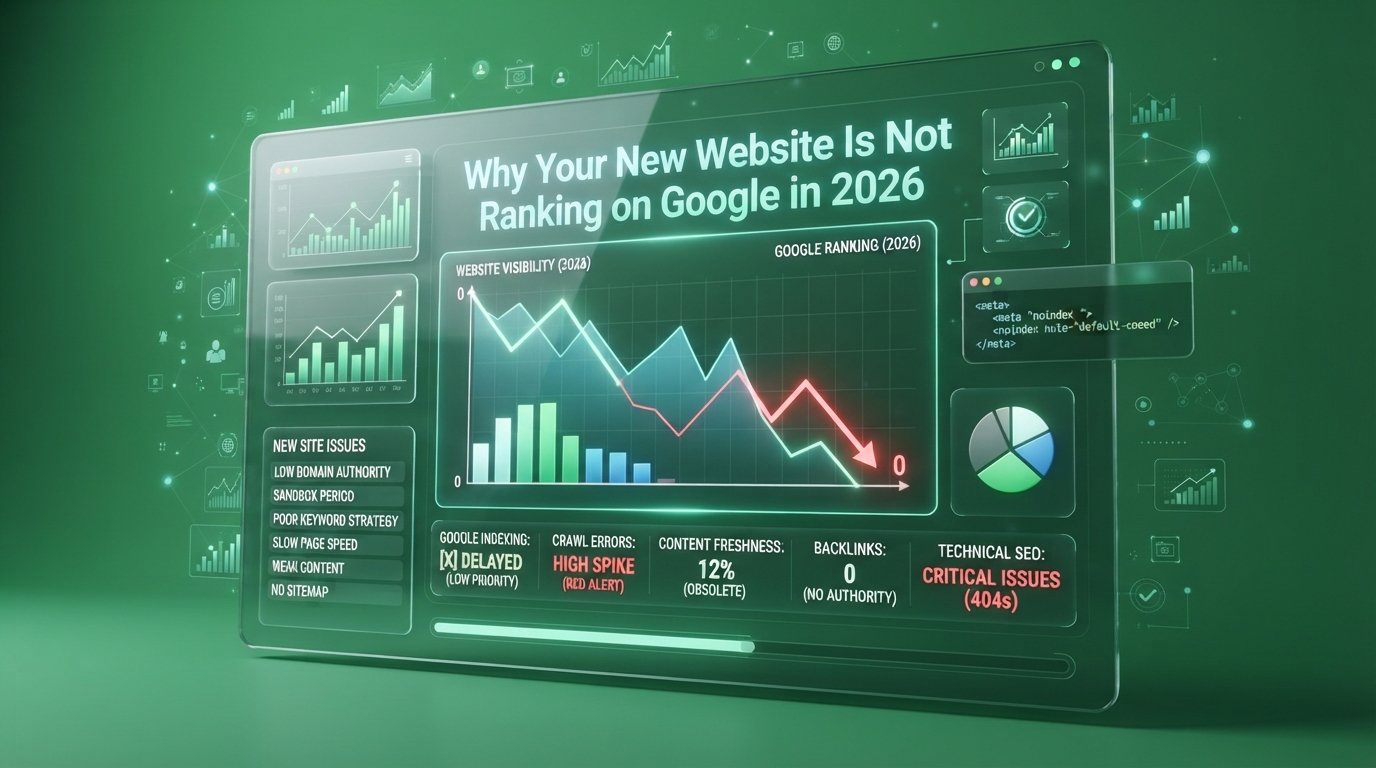
You launched the site, paid the developer, and typed your brand name into Google. Nothing showed up.
Your freelancer says the algorithm needs ninety days to warm up. We’ve audited hundreds of fresh launches at “TheMayk”, and waiting passively is the worst move you can make. Your new website is not ranking on Google because Google either hasn’t been invited in properly, or it already visited and saw zero reason to keep you.
Publishing generic pages just to fill out a new site wastes crawl budget. If a page repeats what ten other sites already say, Google skips indexing it. Cut the fluff, match one clear buyer question per page, and give visitors a real reason to stay. Generic copy keeps new sites invisible.
Here is what usually happens right after a site goes live. You check Google every morning, see zero impressions, and assume you are stuck in some mythical sandbox.
Meanwhile, your developer forgot to uncheck a single staging box before pushing to production. Or your domain sits on an island with zero outside signals telling Google it even exists.
Publishing a website and getting it indexed are two completely separate events. Until you verify what Google actually sees, every day you wait is just expensive guessing.
Think about Google’s index like a crowded warehouse with strict rent. In 2026, the web is flooded with millions of auto-generated pages every single day, so Google no longer indexes every new URL out of politeness.
An Ahrefs study on how long it takes to rank analyzed over a million newly published pages and found that only 1.74% cracked the top 10 within their first year, while the average #1 result is five years old. That isn’t a penalty against your business—it’s basic economics.
Google saves its crawl budget and top spots for domains that prove three things fast:
Technical clarity: Bots can reach, render, and read your pages without hitting walls or duplicate traps.
Distinct value: Your pages answer a real buyer question better than the ten results already sitting on page one.
Outside validation: Real websites and profiles actually point to you.
Google doesn’t rank new websites for existing; it ranks them when ignoring you makes its search results worse.
Before you write another blog post or buy a single backlink, open Google Search Console and check your Page Indexing report. Google literally tells you why your pages are missing if you know how to read the labels.
According to Google Search Console’s Page Indexing documentation, a new site can take anywhere from a few days to a few weeks to get crawled. Look at which bucket your URLs are sitting in right now:
Excluded by ‘noindex’ tag: Your developer left the staging lock on. Google read the page, saw an explicit instruction to stay away, and obeyed it.
Blocked by robots.txt: Your site’s front gate is locked to crawlers, which is a common miss when teams rush a launch or botch a store build the exact kind of blind spot we break down in how to avoid SEO mistakes that cost you traffic.
Discovered – currently not indexed: Google knows your URL exists from your sitemap, but hasn’t bothered to crawl it yet because your domain has zero authority or crawl demand.
Crawled – currently not indexed: This is the brutal one. Google visited your page, read every word, and decided it wasn’t worth adding to the index.
You can’t fix a visibility problem until you know whether Google is blocked, bored, or unconvinced.
Order matters here. Writing twenty articles on a site that Google can’t read—or doesn’t trust—just creates twenty more unindexed URLs.
Inspect your homepage URL inside Search Console and check the live test. Remove any noindex meta tags and verify your robots.txt file isn’t blocking your core pages so Google can actually read your site.
Strip out tag pages, empty category archives, and thank-you URLs from your sitemap. Feed Google only the pages you actually want customers to land on, then request indexing for your homepage and top service or product pages.
Orphaned pages die in the dark. Link directly from your homepage and main navigation to your highest-intent pages using clear, descriptive anchor text so crawlers understand what matters most.
A domain with zero mentions across the web looks like a ghost town. Claim your Google Business Profile, link your site from active social accounts, and get listed in legitimate industry directories so Google connects your domain to a real company.
If your pages sit in “Crawled – currently not indexed,” your copy sounds like every template in your industry. Answer the exact problem your buyer is searching for in the first two sentences, and back it up with specifics the same foundation we lay out in our guide to SEO for startups.
Fix the pipes before you turn on the water.
When a founder brings us a silent site, we don’t start by pitching a six-month blog retainer. We run a technical and intent diagnostic first checking crawl paths, stripping index bloat, mapping buyer queries, and pairing technical fixes with conversion-ready web architecture so the traffic you earn actually turns into revenue.
Most new sites stay invisible because nobody owned the gap between web development and search strategy. Close that gap in week one, and your rankings start compounding months ahead of competitors who are still waiting around.
If your new website is sitting invisible on Google, let’s fix the foundation before you waste another dollar on content. Book a free strategy call at www.themayk.com and we’ll show you exactly what’s holding your site back.
Waiting around for a brand-new site to magically rank is a losing play. Clear the technical roadblocks, read what Search Console tells you, and build pages that answer real buyer questions. Most new domains stay buried because launch teams treat search as an afterthought. Fix the foundation now, and your rankings compound. Stop guessing. Let’s build a growth system that works at www.themayk.com.
Because in 2026, the difference between a “No” and a “Yes” isn’t your tech stack—it’s the human strategy behind it. Let’s turn your digital ghost town into a conversion machine.
Why Your New Website Is Not Ranking on Google in 2026 You launched the site, paid the developer, and typed your brand name into Google. Nothing…
How to Boost Black Friday Sales on a Small Ad Budget Black Friday is eight days away, and you’re trying to boost Black Friday sales on…
How to Use Merchant Center AI Insights to Boost Sales You’re spending thousands every month on Google Shopping and Performance Max, and your impression share is…
How we use your info: Used strictly to review your project, prepare tailored insights, and reach out for a 1-on-1 strategy call. Zero spam, zero shared data.