How to Avoid Regret Buying the Xbox Nano Controller
How to Avoid Regret Buying the Xbox Nano Controller The Xbox Nano Controller is $49.99, pocket-sized, and open for pre-order. The headlines make it sound like…
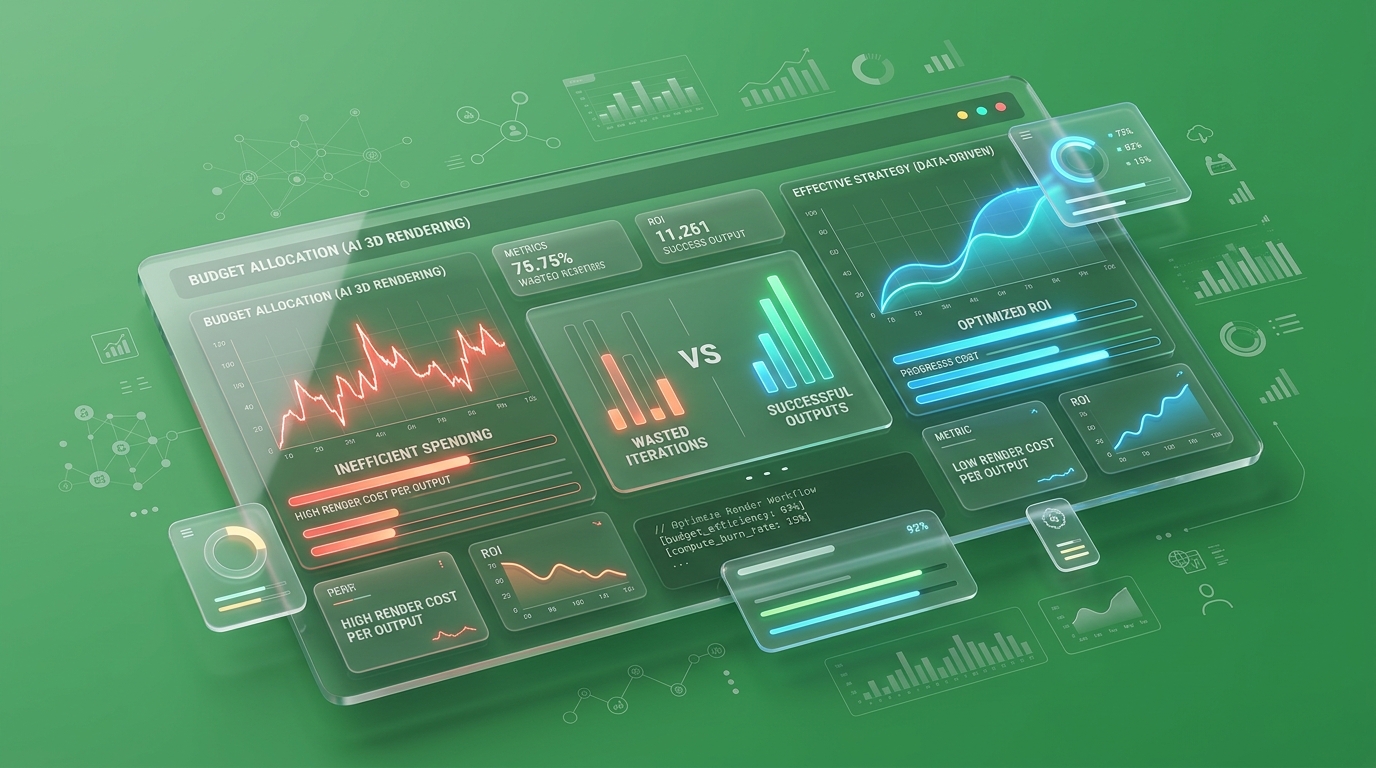
You hired someone to use AI tools for your 3D renders. The outputs came fast. You posted them. Nothing moved. Your agency said give it time. Your designer said it looks great. But your conversion rate didn’t blink.
Here’s the truth nobody’s saying out loud: generative AI for 3D renders is one of the most powerful tools in a brand’s visual arsenal right now but only when it’s used with intention. Most brands are using it like a shortcut. And shortcuts in visual production are a fast track to forgettable content that looks busy, costs real money, and sells nothing.
Before writing a single prompt, top-performing brands ask one critical question: “What specific customer doubt must this render destroy?” Most teams obsess over beauty, lighting, and resolution while ignoring the real job reducing buying friction. The result? Stunning visuals that feel expensive but convert like stock photos. In 2026, the highest-ROI 3D renders aren’t the prettiest. They’re the most strategic. They answer unspoken objections and guide the customer closer to “Add to Cart.”
The generative AI for 3D assets market hit $2.47 billion in 2025 up from $1.89 billion the year before. That’s a 31% jump in twelve months. And it’s accelerating.
The tools have gotten genuinely incredible. What took a team of specialized 3D artists several weeks can now be produced in hours. Platforms like Stable Diffusion, NVIDIA’s generative AI frameworks, and Adobe’s Firefly 3D tools are putting serious output in the hands of anyone with a subscription.
So, everyone’s using them. That’s the problem.
When the barrier to creating 3D renders drops to near zero, your competitors are producing the same volume you are. At the same speed. With access to the exact same tools. The differentiator isn’t the tool anymore it’s the strategy, the art direction, and the quality control behind what the tool produces.
A bad prompt to an AI renderer produces bad output. Fast.
A brand-aligned, strategically directed prompt built on real understanding of lighting behavior, material accuracy, and product psychology produces something that sells. Most brands are getting the first version. Paying for the second.
This is where the money leaks.
Brands approach AI 3D rendering with one obsession: speed and volume. Get more visuals, faster, cheaper. And they achieve that goal completely. They end up with dozens of renders correct proportions, acceptable lighting, no obvious errors.
And then nothing converts.
Technically correct renders and conversion-ready renders are two completely different things.
Shopify’s data shows that products featuring 3D and AR content see an average 94% higher conversion rate than those without it. But that number doesn’t mean any 3D render boosts conversions by 94%. It means the right kind of 3D content interactive, realistic, context-aware does.
There’s a massive difference between a render that exists and a render that answers the question the customer is actually asking. The customer’s real question is never “does this product exist.” It’s: will this look right in my space? Will the material hold up? Does the size actually make sense next to things I already own? A flat, generic AI render even a technically beautiful one doesn’t answer any of that. It just takes up space on a product page. This is why brands burning their budget on raw AI render volume aren’t seeing the return. They’re paying for outputs, not outcomes.
After working across 3D product visualization and commercial visual production for dozens of e-commerce brands, the patterns are consistent. Here’s exactly where the budget goes to die:
Here’s what the brands getting this right are doing differently and it’s not magic, it’s method.
They treat AI as a production tool, not a creative director.
The human strategy comes first. The art direction, the brand brief, the specific visual questions the render needs to answer all of that gets established before a single prompt gets written. The AI then executes at speed and scale. Not the other way around.
They invest in interactive 3D over static renders.
When a product page includes a 3D asset that a user can interact with, 82% of viewers activate and engage with it. Twenty seconds is the average interaction time which is an eternity in e-commerce attention terms. Static renders get scrolled. Interactive 3D gets explored. That engagement difference shows up directly in add-to-cart rates.
They connect render production to performance data.
Every render gets tracked. Which camera angle drives add-to-cart? Which environment context holds attention longest? Which material finish generates the most questions from customers and are those questions friction, or buying signal? The brands winning this are making render decisions off conversion data, not creative instinct.
They use generative AI tools as one part of a wider visual system.
AI handles the volume and the speed. Human art direction handles the strategy and the quality gates. And the output doesn’t just sit on a product page it feeds into 3D animation, into paid media creative, into AR product experiences. That’s a visual system. A pile of individual renders is not.
The output compounds. The costs don’t.
Once a master 3D asset is built correctly and to brand, it can be repurposed across a dozen placements with minimal marginal cost. That’s the black magic most brands are missing not just using AI to produce assets faster, but using AI within a system that extracts maximum value from every asset produced.

This is the insight most brands miss.
The output quality of AI 3D rendering tools in 2026 is genuinely impressive. The tools aren’t the problem. What’s broken is the brief, the strategy, and the system around the tools.
Most brands outsource the creative problem to the AI and then wonder why the results feel generic. Because they are. You gave a powerful tool a vague instruction and expected a brand-specific outcome. That’s not how this works. The brands extracting real ROI from AI 3D rendering are doing something that looks almost old-fashioned: they’re thinking strategically before they act. They know exactly what the render needs to communicate. They know who’s seeing it, at what stage of the funnel, and what the next action is. Then they use AI to execute that brief with ruthless efficiency.
That’s not a tool problem. That’s a strategy problem. And strategy is not something a model generates.
At “TheMayk”, our 3D product visualization work starts with one question: what is this render supposed to make someone do? Not feel. Do.
Every render has a job. That job gets defined before any AI tool opens. From there, we build the brief environment, lighting behavior, material accuracy requirements, the specific customer objection this render needs to neutralize, and exactly where in the funnel it’s deployed. Then we use AI at scale to produce outputs against that brief, with human quality control at every gate.
The result isn’t just better-looking renders. It’s renders that move the needle on conversion, return rate, and brand perception.
The brands we work with aren’t spending more on 3D production. They’re spending it smarter and the difference shows up in revenue, not aesthetics.
The difference between burning your AI 3D render budget and profiting from it comes down to strategy, not software. Stop producing generic assets. Start engineering visual systems that answer real customer questions and drive measurable action. In 2026, the winners won’t have better tools they’ll have better thinking.
Ready to make your renders convert? Let’s audit your visual strategy at www.themayk.com.
Stop guessing on your visual production budget. If your AI renders aren’t converting, the problem isn’t the technology it’s the strategy behind it.
How to Avoid Regret Buying the Xbox Nano Controller The Xbox Nano Controller is $49.99, pocket-sized, and open for pre-order. The headlines make it sound like…
Is the Xbox Nano Controller Actually Comfortable? You’ve read the headlines: five inches, 3.5 ounces, $49.99, all 18 inputs. Everyone’s calling it cute. Nobody’s answered the…
How to Master Social Media Marketing Fast You are posting three times a week on Instagram and LinkedIn. Your designer makes pristine templates, and your team…
How we use your info: Used strictly to review your project, prepare tailored insights, and reach out for a 1-on-1 strategy call. Zero spam, zero shared data.
3 thoughts on “Most brands are burning their AI 3D render budget. Here’s what’s actually working.”
Awesome post!
Love this post!
Excellent post!