
How to Avoid Regret Buying the Xbox Nano Controller
How to Avoid Regret Buying the Xbox Nano Controller The Xbox Nano Controller is $49.99, pocket-sized, and open for pre-order. The headlines make it sound like…
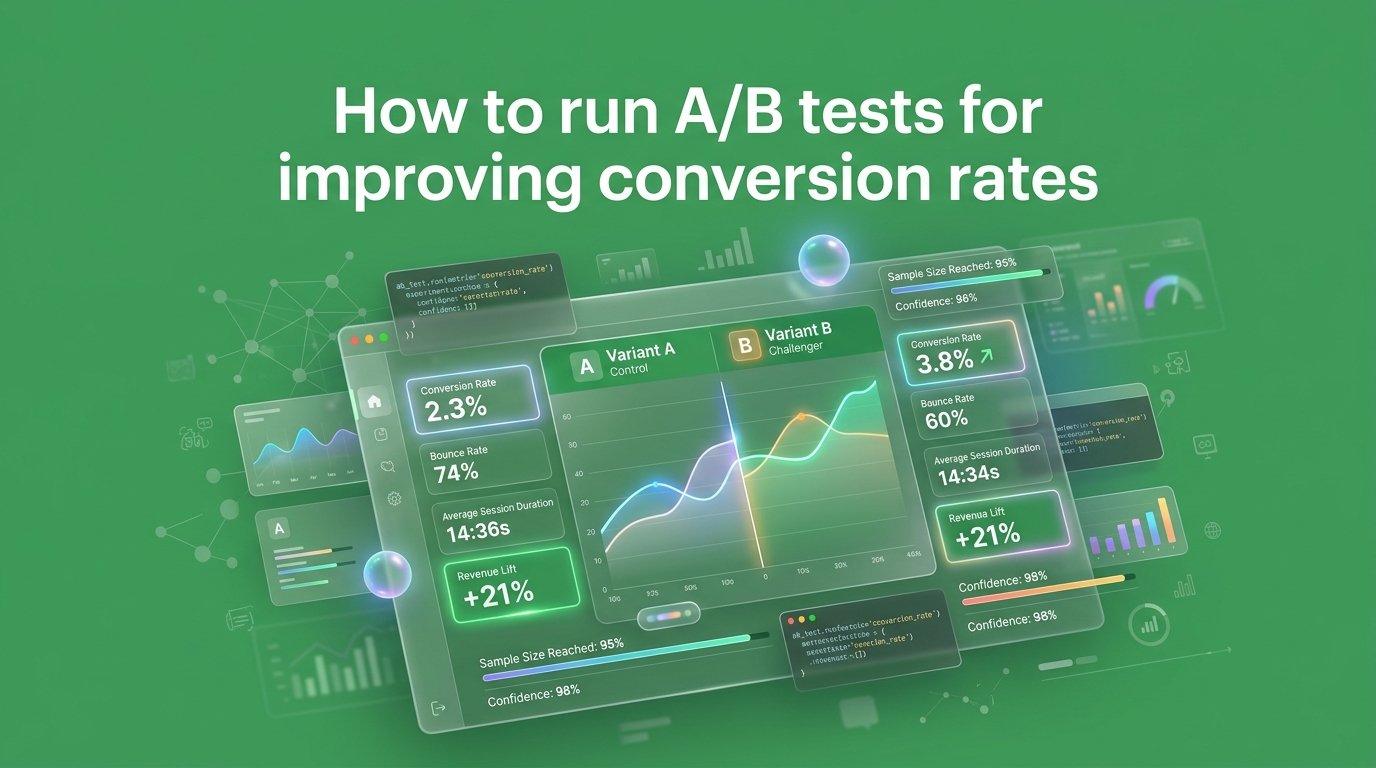
Staring at an inconclusive experiment dashboard is frustrating, especially when you need to improve your landing page conversion rate to grow your business. Without a clear signal, guessing your next move like changing button colors or tweaking copy only wastes time and budget. The truth is, low-impact results aren’t caused by a lack of creative ideas; they stem from a broken testing process.
In this guide, we’ll walk through the exact framework you need to run high-converting experiments that deliver clean data. You will learn how to pinpoint conversion funnel leaks, build data-backed hypotheses, and calculate the right sample size so every test yields actionable, statistically sound results.
Scaling your business requires moving past arbitrary design tweaks and fully embracing evidence-backed experimentation. By diagnosing true friction points, validating rigorous hypotheses, and respecting statistical significance, you transform unpredictable coin flips into a systematic growth engine. Every single test win or lose provides actionable customer intelligence that compounds over time. Stop wasting traffic on random creative guesses; rebuild your testing process today and start turning hidden funnel leaks into reliable, revenue-driving wins.
Here’s a number that should change how you think about testing. Optimizely’s own analysis of 127,000 experiments across 1,100 companies found that only 12% produced a statistically significant win on the primary metric. Teams are almost as likely to see a result move backward as forward.
That’s not a knock on experimentation. It’s the honest math of trying to change how people behave. Most tests don’t win not because testing is broken, but because most tests are built on guesses instead of evidence.
We see this constantly with founders who tell us their A/B testing “doesn’t work.” The tool isn’t the issue. The test was never set up to find anything real in the first place.
This is exactly the kind of gap we close inside our conversion rate optimization process before we ever touch a headline.
Here’s where it gets interesting.
Most “failed” tests never had a real shot. A few things usually go wrong before the test even launches:
A test without a real hypothesis isn’t an experiment. It’s a coin flip with a spreadsheet attached.
This is a pattern we run into constantly with DTC brands specifically. A team runs test after test on the hero section new image, softer CTA copy, a countdown timer and every single one comes back inconclusive. Not a loss, not a win. Just a flat line, month after month.
The traffic usually isn’t the issue. The page gets plenty. The issue is that every test was a guess dressed up as a hypothesis. Nobody asked why visitors were leaving before deciding what to change. Pull the session data on a page like that and the real answer is often boring: most of the drop-off is happening on mobile, at the shipping cost reveal, nowhere near the hero section the team has spent months redesigning.
Here’s the insight most teams miss: the thing you’re testing is rarely the actual problem. It’s just where the problem becomes visible.
A weak headline doesn’t create doubt on its own it exposes doubt that started earlier, in an ad that promised something the landing page never delivers. A high-exit checkout page usually isn’t a design problem. It’s a trust problem, and it often started the moment shipping costs showed up for the first time, three steps in.
This is why we map the funnel and run behavioral tracking before we touch a single button color. You need to see exactly where visitors drop off not guess where you’d drop off if you were them.
Test the leak, not the decoration sitting on top of it, and your win rate stops being a coin flip.
So what do you actually do with this? Here’s the framework.
For brands ready to level up, here’s the insider roadmap:
Pull funnel and behavioral data to find the exact step where people drop. Do this before you write a single headline otherwise you’re just testing your favorite guess.
“If we [change X], then [metric] will move because [reason].” One variable per test. Stack five changes into one variant and a win tells you nothing about which change actually mattered.
Unbounce’s analysis of more than 41,000 landing pages puts the median conversion rate at 6.6% across industries. If your page is already near or above that, small cosmetic tweaks won’t move it much you need a sharper hypothesis, not a brighter button.
Plug your current conversion rate, expected lift, and traffic into a significance calculator. If the math says you need 5,000 visitors per variant, don’t call the test at 1,200 because you’re impatient.
Account for at least one full weekly cycle, ideally two. A test that looks like a winner on Tuesday can flip by Sunday once the weekend traffic mix shows up.
A losing test tells you what your customers don’t want just as clearly as a winner tells you what they do. Document both. Then test again because one test is a data point, not a strategy.
Notice what’s missing from this list: a step called “brainstorm creative ideas.” That’s on purpose. Creativity matters, but it comes after step one, not instead of it. The order is what separates a testing program from a pile of random tweaks.
Booking.com didn’t become the largest accommodation platform in the world by running one clever test. Harvard Business Review reports the company runs roughly 25,000 experiments a year. The volume not any single test is what compounds.
One good test tells you something. A hundred small tests, run right, tell you everything.
This is the exact process we walk through before touching a single ad or landing page for a new client — a full funnel and behavioral pass, a prioritized test roadmap, and real significance math instead of gut calls. Most audits turn up three to five leaks nobody had tested before.
If your tests keep coming back inconclusive, that’s not bad luck. That’s a sign your process needs rebuilding before your next headline does.
Stop guessing which button color fixes your funnel. Book a free CRO audit at themayk.com and let’s find where your traffic is actually leaking.
A/B testing isn’t about throwing creative spaghetti at the wall it’s about using data to fix real friction. When you replace gut guesses with a structured setup, even losing tests yield invaluable insights. Stop decorating the leaks in your funnel. Fix your process, run experiments built on evidence, and turn inconclusive noise into predictable, revenue-driving wins.
Because in 2026, the difference between a “No” and a “Yes” isn’t your tech stack it’s the human strategy behind it. Let’s turn your digital ghost town into a conversion machine.
How to Avoid Regret Buying the Xbox Nano Controller The Xbox Nano Controller is $49.99, pocket-sized, and open for pre-order. The headlines make it sound like…
Is the Xbox Nano Controller Actually Comfortable? You’ve read the headlines: five inches, 3.5 ounces, $49.99, all 18 inputs. Everyone’s calling it cute. Nobody’s answered the…
How to Master Social Media Marketing Fast You are posting three times a week on Instagram and LinkedIn. Your designer makes pristine templates, and your team…
How we use your info: Used strictly to review your project, prepare tailored insights, and reach out for a 1-on-1 strategy call. Zero spam, zero shared data.