How to Avoid Regret Buying the Xbox Nano Controller
How to Avoid Regret Buying the Xbox Nano Controller The Xbox Nano Controller is $49.99, pocket-sized, and open for pre-order. The headlines make it sound like…
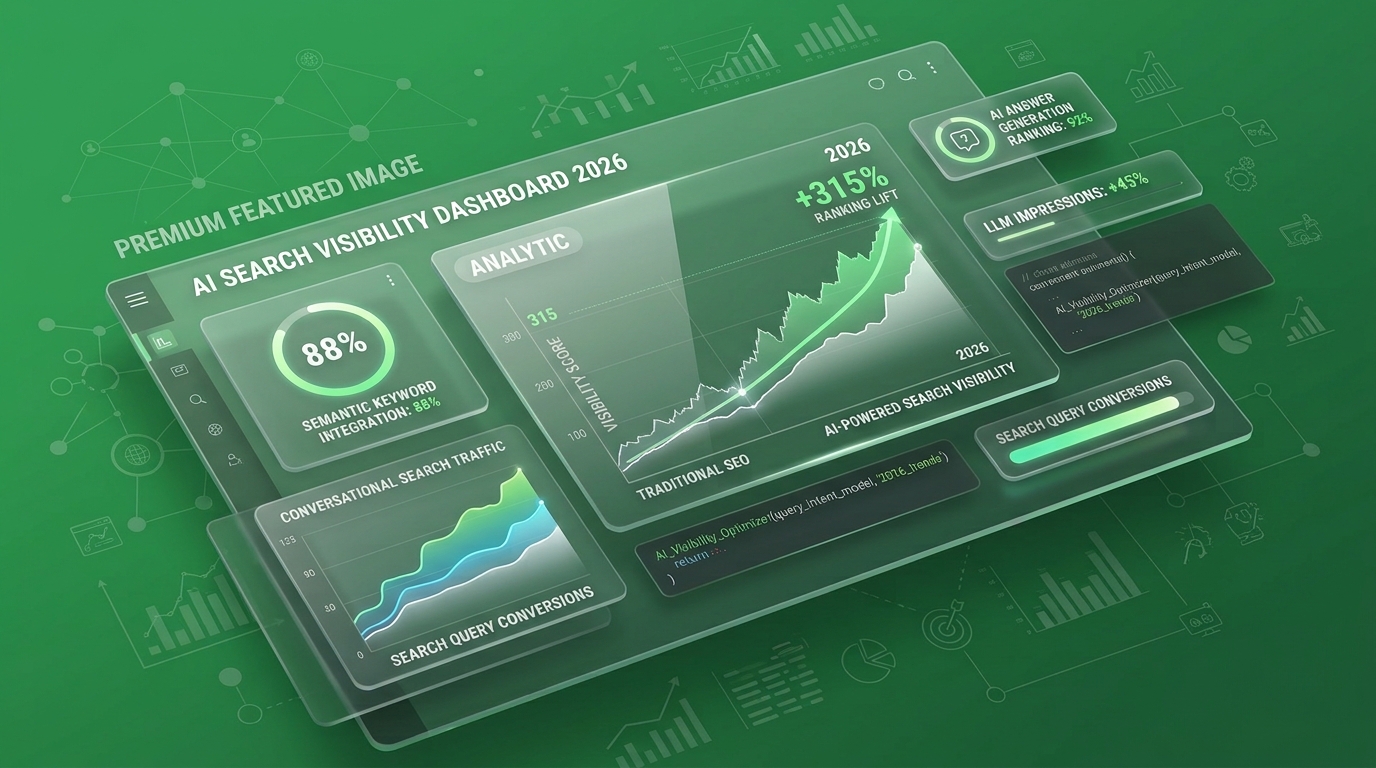
Most businesses doing SEO in 2026 are still building for a version of Google that no longer runs the show. They’re ranking. They’re getting impressions. And their traffic is quietly bleeding out.
Here’s what’s actually happening: the person searching for what you sell isn’t scrolling through ten blue links anymore. They’re typing a question into ChatGPT, Perplexity, or Google’s AI Mode and they’re getting a single synthesized answer. Your website either shows up inside that answer, or it doesn’t exist.
This isn’t a prediction. Gartner projects that search volume on traditional engines will drop 25% by 2026. Zero-click searches on Google jumped from 56% to 69% in a single year following AI Overviews’ rollout. The game changed. Most agencies just haven’t told their clients yet.
The truth is harsh but clear: ranking #1 on Google no longer guarantees visibility. AI engines like ChatGPT, Perplexity, and Google’s AI Overviews bypass traditional search results and synthesize answers from the most extractable, authoritative sources. Your perfectly optimized page can still be completely ignored if it lacks direct answers, verifiable data, and AI crawler access. This silent shift explains why many businesses feel their traffic mysteriously disappearing despite strong rankings.
Traditional SEO measures clicks. But AI search doesn’t always send clicks it sends answers.
When someone asks an AI engine “what’s the best marketing agency for e-commerce brands,” they might get a synthesized response that mentions three specific agencies, their strengths, and a recommendation. If your brand isn’t cited in that answer, you were never part of the conversation. Even if you rank number one on Google.
AI-referred sessions jumped 527% year-over-year in the first five months of 2025. That traffic is real. It’s growing. And it’s going to brands who’ve built for it.
The discipline that captures it is called Generative Engine Optimization (GEO) and it’s the single most important shift in organic visibility since Google first rewarded backlinks.
Here’s the uncomfortable number: 26% of brands had zero mentions in AI Overviews in a recent industry snapshot. One in four brands completely absent.
And it’s not random. AI engines don’t pull from whoever ranks highest on Google. They pull from whoever is the clearest, most authoritative, most structured source for the specific answer being asked. You can have a high domain authority and still get skipped if your content doesn’t answer questions directly, if your site blocks AI crawlers, or if your structured data is broken or missing.
82% of AI citations come from earned media, not owned content or paid placements. So your press coverage, your third-party mentions, your guest posts on authoritative sites those now directly affect whether AI systems consider you credible enough to cite.
The brands winning AI search aren’t necessarily the biggest. They’re the ones who built their content to be extractable, factual, and authoritative before anyone else did. That window is still open. But it’s closing fast.
This is the part nobody explains properly.
AI engines don’t search the way humans search. They’re not scanning for keyword density. They’re running what’s called a Retrieval-Augmented Generation (RAG) process they pull relevant passages from across the web and synthesize them into a single coherent answer. Your content either makes the cut as a passage worth pulling, or it gets skipped.
Research from Princeton, published at ACM KDD 2024, found that content with verifiable statistics and named citations achieves 30–40% higher AI visibility than unoptimized content. That’s the most empirically validated GEO finding we’ve seen. Statistics. Named sources. Clear, direct answers. That’s what gets cited.
There are three layers AI engines evaluate before pulling from your content:
Technical accessibility AI crawlers like GPTBot and CCBot need to actually reach your pages. If your robots.txt file blocks them, you’re invisible by default. This catches a surprising number of businesses.
Structural clarity AI systems pull individual passages, not entire pages. They favor content with question-based headings, direct answers in the first sentence of each section, and logical flow. A page that requires a human to “read the context” is a page AI can’t easily extract from.
Authority signals This is where third-party credibility matters. Top brands dominate AI citations, but smaller brands can compete when they own a clearly defined topic and show up consistently across platforms. Niche authority beats vague general authority every time.
Clear all three bars and you’re in the running. Miss any one of them and the algorithm moves to the next source.

GEO sounds complex. The execution is actually straightforward once you know what you’re optimizing for.
Go to your robots.txt file and check whether GPTBot, CCBot, PerplexityBot, and other AI crawlers are blocked. If they are, your site is invisible to every AI search engine full stop. This is the fastest win. Fix it before anything else.
Every major section of every piece of content should answer one specific question. Put the answer in the first sentence. Don’t build to it. Don’t hedge. AI systems want to find the truth quickly and move on one test found that moving the direct answer to the top of a page increased AI brand citations by 65%. The format change is minimal. The visibility impact isn’t.
Opinions don’t get cited. Data does. Every 150–200 words of body content should include a specific statistic, figure, or finding with a named source. This matches the Frase.io GEO research showing fact density is one of the core signals AI engines use to evaluate citation-worthiness. If your content is heavy on commentary and light on data, you’re writing for humans and being ignored by machines.
AI systems cross-reference what you say about yourself against what others say about you. Getting mentioned in comparison articles, industry roundups, and authoritative “best of” lists matters now in a way it never did for traditional SEO. This is earned media with compounding returns because 82% of AI citations come from earned media sources, not your own website.
If your content marketing strategy doesn’t include a plan for third-party placement, it’s missing the mechanism that actually drives AI visibility.
Structured data is how AI systems understand context beyond the words on the page. FAQ schema, Article schema, Organization schema these tell AI crawlers what your content is, who it’s from, and why it’s authoritative. An alarming number of websites including those with strong SEO have minimal or broken structured data. This is one of the most overlooked technical fixes with the most direct impact on AI search visibility.
This is worth saying clearly because there’s a lot of noise in the market about GEO making SEO obsolete.
It doesn’t.
AI search engines still draw heavily from high-ranking content. Your domain authority, your technical SEO fundamentals, your backlink profile they all feed into whether AI systems consider you a credible source. The difference is that GEO adds a layer on top: structuring what you’ve built so that AI systems can actually extract, interpret, and cite it.
Think of it this way: traditional SEO gets you in the room. GEO gets you quoted in the meeting.
Both matter. The brands that win over the next two years will be running both simultaneously 92% of marketers plan to optimize for AI search, but only 40.6% are currently doing so. That gap is your opportunity.
Our SEO and organic growth work at THEMAYK is already built around this layered approach traditional technical foundations paired with GEO-ready content architecture. Because building for one without the other leaves visibility on the table.
Here’s the honest read on where we are:
54% of U.S. marketers planned to implement GEO within three to six months as of January 2026. That means the competitive window is still open but it’s actively closing. Early movers in any algorithmic shift compound their advantage. Citation authority, like domain authority before it, builds over time.
The businesses that invest in GEO now will be the ones AI systems cite in 2027 and 2028. The ones who wait will look back at 2026 the same way people looked back at 2011 and wished they’d started SEO earlier. The mechanics aren’t hard. The decision to start is. If your current agency hasn’t brought this up yet, that’s worth thinking about.
We run full AI search optimization audits as part of our organic growth work starting with your crawler access, content architecture, and entity footprint, and building from there. It takes about a week to understand where you stand, and what the actual gaps are.
If you’re ready to stop guessing where your visibility is going, let’s find out. Book a strategy call at www.themayk.com.
Because in 2026, the difference between a “No” and a “Yes” isn’t your tech stack it’s the human strategy behind it. Let’s turn your digital ghost town into a conversion machine.
How to Avoid Regret Buying the Xbox Nano Controller The Xbox Nano Controller is $49.99, pocket-sized, and open for pre-order. The headlines make it sound like…
Is the Xbox Nano Controller Actually Comfortable? You’ve read the headlines: five inches, 3.5 ounces, $49.99, all 18 inputs. Everyone’s calling it cute. Nobody’s answered the…
How to Master Social Media Marketing Fast You are posting three times a week on Instagram and LinkedIn. Your designer makes pristine templates, and your team…
How we use your info: Used strictly to review your project, prepare tailored insights, and reach out for a 1-on-1 strategy call. Zero spam, zero shared data.