
How to Avoid Regret Buying the Xbox Nano Controller
How to Avoid Regret Buying the Xbox Nano Controller The Xbox Nano Controller is $49.99, pocket-sized, and open for pre-order. The headlines make it sound like…
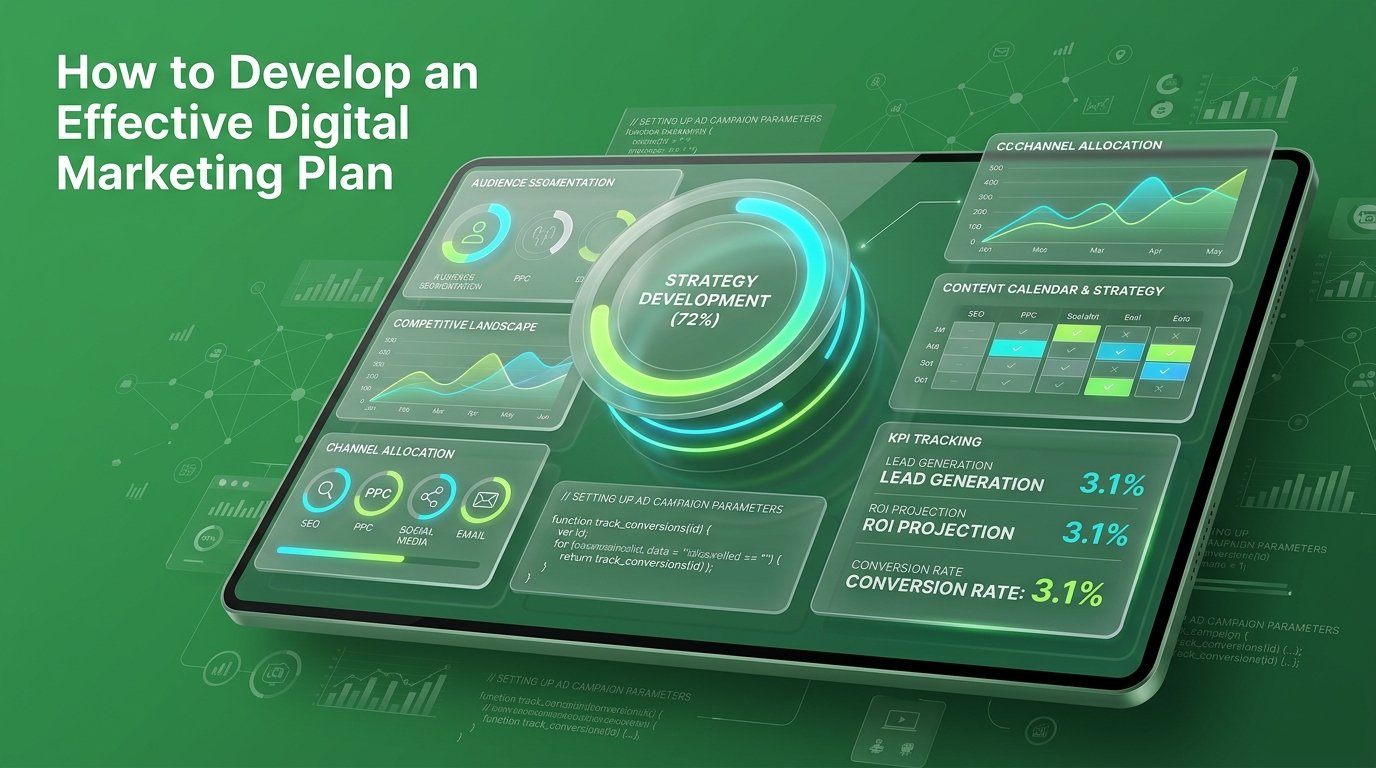
If you want to scale your business predictably, relying on a generic digital marketing plan framework just won’t cut it. Most business owners have a marketing document tucked away in a folder a glorified wishlist of social channels and vague targets that never actually generates revenue. But real growth doesn’t happen by accident; it requires a strategy built on intentional, high-converting execution.
In this guide, we break down what it really takes to move past cookie-cutter templates and build a plan that delivers measurable ROI. You’ll learn how to audit your current approach, map out your customer journey, and execute a 90-day strategy that transforms casual visitors into loyal customers. Let’s turn your marketing strategy into your most profitable asset.
A tactical checklist gives you the illusion of progress, but real revenue growth requires a deliberate strategy. When you align your messaging, fix leaky funnel stages, and focus your budget on two or three proven channels, every marketing dollar works significantly harder. Instead of spreading resources thin across every trending platform, a structured 90-day execution framework turns daily activities into predictable, measurable sales results.
Ask most businesses for their marketing plan and you’ll get a spreadsheet. Post three times a week on Instagram. Run Google Ads at $2,000 a month. Send a newsletter. Maybe try TikTok.
None of that is wrong exactly. But none of it is a plan either. A list of tactics tells you what to do. It doesn’t tell you why, in what order, or how you’ll know it’s working.
Marketing budgets aren’t exactly growing to cover for this kind of guessing. Gartner’s 2026 CMO Spend Survey found that the average company still spends just 7.8% of revenue on marketing, a figure that’s been flat for years and sits well below where it stood four years ago. Fewer dollars means every decision in your plan has to earn its place.
So when a plan is really just a channel list, you’re not being strategic. You’re spreading a shrinking budget across more places and hoping something sticks.
We see this constantly with founders who’ve already tried the obvious moves. They ran the ads. They hired a freelancer for social. They paid an agency for a “brand refresh” that came with a new logo and nothing else. Nothing was wrong with the execution. There was never a plan telling that execution where to point.
The tell is always the same. Ask the business what their marketing plan is designed to achieve, specifically, and you get an answer like “more visibility” or “growth.” Those aren’t goals. They’re moods. A real plan names a number, a timeline, and the exact mechanism that’s supposed to move it.
That’s not a plan. That’s expensive guessing.
Here’s the part most businesses skip. Before you pick a single channel, you need to know where your money is actually leaking.
We run a funnel breakdown on almost every new client before we touch a single campaign. Nine times out of ten, the problem isn’t a missing channel. It’s a gap somewhere between the first click and the sale.
A marketing plan’s real job is sequencing decisions, not selecting platforms. Which stage of your funnel is losing the most people? What does that stage need to fix it? Only then does a channel make sense.
Most businesses build their plan backward. They pick the channel first because it feels like doing something and figure out the messaging and measurement later. Flip that order and the whole plan gets sharper.
Think about it this way. If your website converts one out of every hundred visitors, doubling your ad spend doesn’t fix anything. It just buys you twice as many visitors who leave for the same reason. The channel was never the leak. The plan just never looked hard enough to find where the leak actually was.
This is also why generic advice falls apart in practice. “Post consistently” and “know your audience” sound reasonable, but they skip the actual work: figuring out which specific stage of your specific funnel is costing you the most customers, this month, with the traffic you already have.
Here’s where it gets useful.
This is the exact sequence we walk every client through, whether they’re a DTC brand or a Series A startup building their first real marketing engine.
You can’t fix what you haven’t measured. Pull your current analytics and look at where traffic actually converts, not just where it comes from. Most businesses are surprised to learn their highest-traffic channel isn’t their highest-converting one.
Not impressions. Not followers. One number tied to revenue cost per acquisition, return on ad spend, or qualified leads per month. Everything in the plan should move that number, or it doesn’t belong in the plan.
Where does your customer first hear about you? What do they need to see before they trust you enough to buy? A plan built around the journey looks completely different from one built around a list of platforms.
Trying to run Google Ads, Meta and TikTok campaigns, SEO, and email all at once with a limited budget means doing all of them badly. Pick the channels that match where your customer actually is, and fund them properly.
This one gets skipped constantly. Research from the Nielsen Norman Group shows people scan web pages in an F-shaped pattern, reading across the top and down the left side rather than word for word. If your landing pages bury the offer in paragraph three, most visitors never see it.
This matters more than businesses think. HubSpot’s own data found that companies see a 55% increase in leads simply by growing their number of landing pages from ten to fifteen. More focused pages, built for how people scan, consistently outperform one crowded page trying to do everything.
An annual plan is a guess you commit to for twelve months. A 90-day cycle lets you kill what’s not working before it burns through the budget. Pair it with a dashboard that shows the one metric from Step 2 in plain numbers, not a report full of jargon nobody reads on a Friday afternoon.
That’s the whole system. No mystery, no fluff. Just a sequence that puts thinking before spending.
Notice what’s missing from that list. There’s no step that says “be more creative” or “post more often.” Those aren’t strategy. They’re activity, and activity without a target is just motion. The businesses that actually grow are the ones who know exactly which number they’re moving and why.
This is the audit and framework we walk through before a single dollar goes into an ad account. It usually takes about a week, and it almost always uncovers two or three places where the current plan is quietly leaking money.
If you want the longer version of this, including how we think about brand strategy and positioning alongside the plan itself, we’ve broken that down in our guide to digital marketing for businesses and in why marketing actually drives growth in the first place.
Stop guessing. Let’s build a plan that works. Explore what that looks like at www.themayk.com.
Stop letting your marketing budget vanish into a void of unmeasured tactics and “growth” moods. Real momentum doesn’t come from being on every platform; it comes from fixing your funnel leaks and committing to a focused, 90-day strategy. If you’re ready to trade expensive guessing for a clear system that actually moves your revenue numbers, visit www.themayk.com and let’s build a plan that works.
Because in 2026, the difference between a “No” and a “Yes” isn’t your tech stack it’s the human strategy behind it. Let’s turn your digital ghost town into a conversion machine.
How to Avoid Regret Buying the Xbox Nano Controller The Xbox Nano Controller is $49.99, pocket-sized, and open for pre-order. The headlines make it sound like…
Is the Xbox Nano Controller Actually Comfortable? You’ve read the headlines: five inches, 3.5 ounces, $49.99, all 18 inputs. Everyone’s calling it cute. Nobody’s answered the…
How to Master Social Media Marketing Fast You are posting three times a week on Instagram and LinkedIn. Your designer makes pristine templates, and your team…
How we use your info: Used strictly to review your project, prepare tailored insights, and reach out for a 1-on-1 strategy call. Zero spam, zero shared data.