
How to Avoid Regret Buying the Xbox Nano Controller
How to Avoid Regret Buying the Xbox Nano Controller The Xbox Nano Controller is $49.99, pocket-sized, and open for pre-order. The headlines make it sound like…
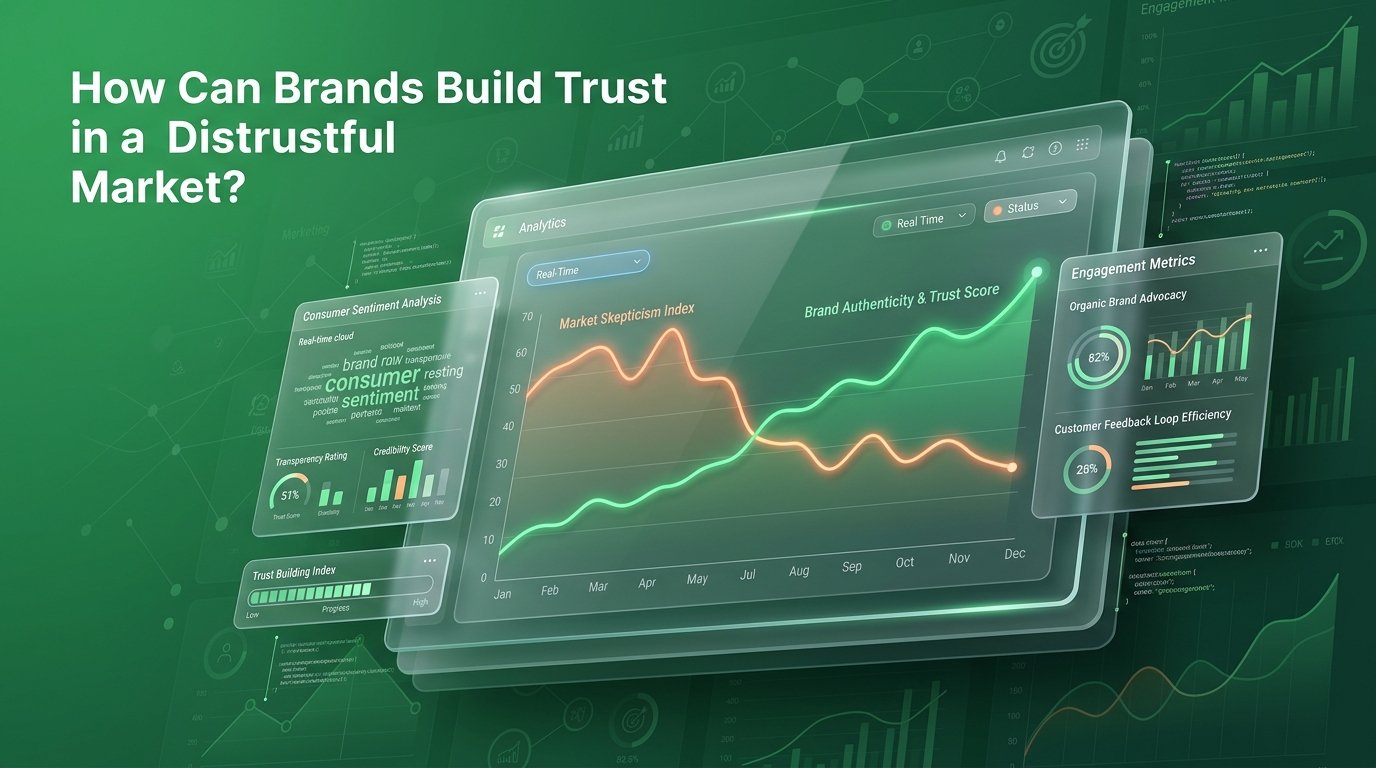
Most brands think they have a marketing problem. They don’t. They have a trust problem and no amount of paid ads or prettier packaging fixes that. Buyers right now are exhausted. They’ve been misled by promises that didn’t deliver, burned by companies that disappeared after the sale, and bombarded by content so polished it feels hollow. The default emotion a new customer brings to your brand isn’t curiosity. It’s skepticism.
And here’s what makes this harder: according to PwC’s 2024 Trust Survey, 90% of executives believe their customers highly trust them. Only 30% of consumers agree. That’s a 60-point gap and it’s getting wider every year. Which means most brands are operating on a completely false assumption about where they stand.
Your data dashboards track traffic, click-through rates, and session lengths, but they completely miss the invisible friction of a trust gap. When qualified prospects stall after receiving a proposal, it is rarely a pricing issue. It is an alignment problem. Your audience instantly senses a contradiction between your polished marketing promises and their actual experience, creating a silent friction point that quietly kills your conversion rates from the inside out.
This is the part most businesses get wrong. They treat trust as a messaging problem something fixed by better copy, cleaner creatives, more testimonials on the homepage. But trust isn’t something you write. It’s something you earn through consistent, repeated proof. When a potential customer only ever sees your brand through paid promotions, sponsored posts, or outbound pitches, there’s nothing for them to anchor to. No signal that you exist when you’re not asking for something. No evidence of a perspective. No reason to believe you’ll still be around in six months.
The brands that are winning on trust right now aren’t doing more advertising. They’re doing more showing up.
They’re publishing content that teaches. Sharing numbers that hold them accountable. Building communities where real users talk. Running organic social media strategies that generate conversation, not just clicks.
The trust gap exists because brands stopped acting like businesses with something real to offer and started acting like billboards with a checkout button.
Before a single person reaches out to you, they’ve already made a decision. They’ve Googled you, gone through your social profiles, read your reviews, scrolled your blog, and checked whether your website feels like a real company or a quick cash grab. Your brand is being audited constantly. You’re just not in the room when it happens.
What do they find when they look?
Edelman’s 2025 Brand Trust Report found that 80% of consumers trust the brands they personally use placing brand trust higher than trust in government or media. But notice the qualifier: the brands they personally use. The operative word isn’t “brands.” It’s “personally.” Trust is earned through direct experience, not brand awareness.
And according to Edelman’s same research, 73% of people say their trust in a brand increases when it authentically reflects the current culture. Only 27% trust a brand more when it stays silent and focuses solely on products.
Silence isn’t neutral. It reads as having nothing worth saying.
The credibility signals that actually move people are:
Generic branding communicates nothing and therefore earns nothing. The brands cutting through aren’t louder they’re clearer.
There’s a category of brand that publishes regularly, follows every content best practice, and still doesn’t convert. Their blogs are well-structured. Their visuals look professional. Their social posts get decent engagement. But nothing compounds. Nothing moves.
Here’s the uncomfortable truth: content that doesn’t have a point of view doesn’t build trust. It builds familiarity, at best.
Trust comes from watching someone demonstrate that they actually know what they’re talking about and that they’re willing to take a stand on it. Not everything. Not loudly. But consistently. We see this pattern constantly across the brands we work with. The content is safe. It agrees with the industry consensus. It avoids saying anything a competitor couldn’t also say. And so it blends into the pile of content that everyone produces and no one remembers.
The fix isn’t more content. It’s a sharper content strategy built around what you actually believe about your market, your category, and your customers things only you would say, backed by experience only you have.
Opinions are the most underused trust-building tool in marketing. Because most brands are too afraid to have one.
This is becoming a baseline expectation, not a differentiator.
PwC’s Voice of the Consumer Survey 2024 surveyed 20,662 consumers across 31 countries. Data protection came out as the single leading factor influencing consumer trust cited by 83% of respondents. Quality of goods ranked second. The way a company treats its employees came third.
Notice what that order means. Before you’ve even gotten to the product, people are already evaluating whether they trust how you handle their information. The experience they’re having before the sale shapes whether they believe the sale. Brands that are transparent about their processes how they price, who they work with, what they can’t do, where they’ve made mistakes consistently outperform brands that manage perception. It’s not complicated. It’s just uncomfortable. Most companies are not set up to be honest about limitations. There’s too much pressure to appear perfect, too much fear that showing a flaw costs the deal.
But buyers are tired of perfect. They don’t believe it anymore. What they respond to is specificity and honesty a brand that says “here’s exactly what we do, here’s who it’s right for, and here’s who it isn’t” will outconvert a brand that claims to be the answer to everything.
The fastest way to build credibility is to be the one brand in your category that doesn’t overstate what it does.
Price was the deciding factor for a long time. It’s not anymore not for the buyers worth having.
Edelman’s data from their 2025 report shows that trust is now equal to price and quality in brand purchase decisions. The report’s summary put it plainly: for the first time, what you believe about a brand is as important as what it costs or how good it is.
The implication for growth-stage brands is significant. You can’t outspend established competitors on paid acquisition. But you can out-trust them. And trust compounds in a way ad spend doesn’t. A customer who trusts you before they buy doesn’t need to be retargeted 15 times. They don’t convert because you outbid a competitor on Google. They convert because they’ve been paying attention for months and you’ve given them enough reason consistently, without asking for anything to believe you’re the right call.
That kind of trust doesn’t happen by accident. It’s engineered through:
Your conversion rate isn’t just a funnel problem. It’s a trust problem. The two are the same thing, measured at different points in the journey..
There’s a generation of buyers particularly in the 25 to 44 range who grew up being marketed to and learned to be fluent in the tactics. They know what a retargeting ad looks like. They know what a “limited time offer” means. They know when something is content and when it’s a pitch wearing a content costume. They don’t reject marketing. They reject marketing that underestimates them.
According to the 2025 Edelman Trust Barometer Special Report, consumers increasingly expect brands to be personal and relevant not aspirational and distant. The shift described is from “changing the world” to “changing my world.” The brands earning loyalty right now are the ones showing up in ways that feel useful, specific, and real.
This isn’t a small pivot. It requires a completely different content and brand philosophy one where every asset you put out is designed to serve the person reading it, not perform for the algorithm or impress the room.
The brands that understand this are quietly building the most defensible positions in their categories. Not through budget. Through earned attention and real trust.
If you’re still building marketing for where buyers were five years ago, you’re already behind.
When a new client engages “TheMayk”, the first thing we look at isn’t the creative. It’s the credibility stack.
We audit the brand’s digital presence, funnel behavior, and content output to find the trust gaps the points where a prospect’s confidence drops off. Those drops usually cluster in the same places: inconsistent visual identity, generic positioning, weak or vague social proof, and content that covers topics without committing to a perspective.
Then we build the system that closes those gaps. Not with volume, but with precision. A content strategy that actually says something. A brand identity that actually stands for something. Personalization systems that speak to the right person at the right moment. And performance tracking that shows exactly what’s working.
Trust is no longer the soft, intangible side of marketing. It’s the variable that explains most of the performance gap between brands that are scaling and brands that are stuck. If you want to know where your trust gaps are and what they’re costing you let’s find out. Book a free audit call at www.themayk.com. Stop guessing. Start growing.
Because in 2026, the difference between a “No” and a “Yes” isn’t your tech stack it’s the human strategy behind it. Let’s turn your digital ghost town into a conversion machine.
How to Avoid Regret Buying the Xbox Nano Controller The Xbox Nano Controller is $49.99, pocket-sized, and open for pre-order. The headlines make it sound like…
Is the Xbox Nano Controller Actually Comfortable? You’ve read the headlines: five inches, 3.5 ounces, $49.99, all 18 inputs. Everyone’s calling it cute. Nobody’s answered the…
How to Master Social Media Marketing Fast You are posting three times a week on Instagram and LinkedIn. Your designer makes pristine templates, and your team…
How we use your info: Used strictly to review your project, prepare tailored insights, and reach out for a 1-on-1 strategy call. Zero spam, zero shared data.