
How to Avoid Regret Buying the Xbox Nano Controller
How to Avoid Regret Buying the Xbox Nano Controller The Xbox Nano Controller is $49.99, pocket-sized, and open for pre-order. The headlines make it sound like…
You’re publishing blogs. You’re hitting word counts. You’ve got your keyword density dialed in, your internal links mapped, your meta descriptions clean.
And your rankings are still sliding.
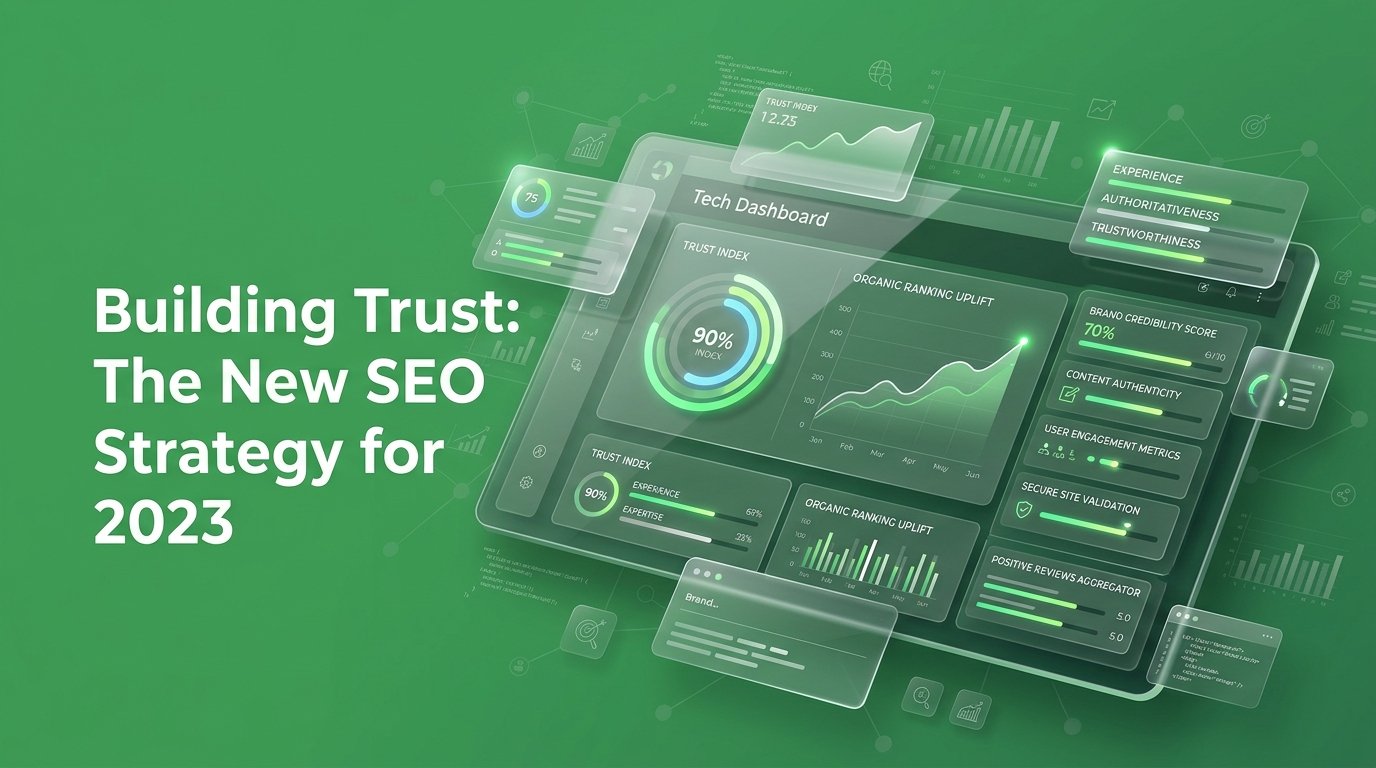
Here’s what no one’s saying out loud: Google stopped caring about your content optimization playbook in September 2023. What it actually rewards now what it has been signaling for years and finally codified is trust. And most businesses are still treating trust like a branding team problem, not an SEO strategy.
That’s expensive confusion.
SEO tactics have a shelf life. Algorithms change, ranking factors evolve, and yesterday’s optimization tricks quickly become today’s baseline requirements. Trust works differently. Every expert article, customer review, industry mention, and proven result adds another layer of credibility that compounds over time. While competitors chase the latest ranking hack, trusted brands build an asset that’s far harder to replicate. In modern search, authority isn’t something you optimize once it’s something you earn repeatedly, and the returns keep growing long after the tactics fade.
The standard advice is to add more content, build more backlinks, and tighten up your technical audit.
None of that is wrong. All of it is incomplete.
Because what Google’s September 2023 Helpful Content Update actually did was roll trust-based evaluation into the core ranking algorithm. Not as a soft guideline as a structural ranking signal. Sites that demonstrate genuine expertise, real experience, and actual authority in their space get rewarded. Sites that produce volume-optimized, human-sounding-but-hollow content get demoted.
The question isn’t “how much content are you publishing?” It’s “does Google believe you know what you’re talking about?”
Most brands can’t answer that question confidently. That’s the problem.
In December 2022, Google added a fourth dimension to its E-A-T framework, turning it into E-E-A-T: Experience, Expertise, Authoritativeness, and Trustworthiness.
Then, in their own Search Quality Rater Guidelines, they did something almost no one picked up on they ranked trust above the other three. Not equal to them. Above them. Their exact framing: trust is the most important member of the E-E-A-T family.
Think about what that means in practice.
You could have genuine expertise and lose ground to a competitor who has built more visible, more verified, more consistently demonstrated trust across their digital presence. Content quality is table stakes. Trust is the differentiator. Most SEO strategies aren’t built around this. They’re still built around the old model keyword coverage, link volume, page speed. Those matter. But they’re hygiene factors now, not growth levers.
Here’s where most businesses get this wrong.
Trust, in Google’s framework, is not about your tone of voice. It’s not about being “authentic.” It’s not about your About page saying you’ve been in business since 2009.
It’s about verifiable signals of credibility at scale.
Does your content demonstrate first-hand experience with the topic not summarised research, but actual proof you’ve done the thing? Do other credible sources in your industry reference you, link to you, or discuss your perspective? Is your author identity clear, consistent, and tied to demonstrable expertise? Are your claims backed by sources that hold up to scrutiny?
This is why a BrightLocal 2023 study found that 76% of consumers regularly read reviews before engaging with a local business because trust verification has become a reflex, not an exception. Consumers are running their own E-E-A-T checks before Google even serves them a result.
The businesses that rank aren’t just optimized. They’re believed.
We’ve audited content operations across dozens of businesses. The pattern is consistent. Companies produce content at scale. Topics are researched, briefs are built, articles are published. But the content reads as assembled rather than experienced. There’s no perspective that couldn’t have been generated by anyone with an hour and a search engine. There’s no evidence the writer has actually been inside the problem.
Google calls this “unhelpful content.” Your readers call it forgettable. Both are right.
This is the trust gap and it’s not a content quality problem, it’s a content strategy problem. The fix isn’t better writing. It’s different inputs.
Before you write about a topic, ask: what do we actually know about this that nobody else does? What have we seen in our own client data, our own projects, our own failures? That’s the raw material for content that builds trust. Not because it sounds good because it is specific, it is earned, and it cannot be replicated by a competitor who hasn’t done the work.
This isn’t abstract. Here’s how we approach it at “TheMayk” when we’re building an organic growth strategy for a client from scratch.
1. Audit your trust signals before touching content. Pull your Google Search Console data and look at your click-through rates relative to your rankings. If you’re ranking on page one but getting low CTR, your brand isn’t trusted enough to click. That’s a reputation problem, not a content problem. Fix what people see before you optimize what they find.
2. Build author authority, not just content authority. Faceless blogs don’t build E-E-A-T. Consistent, named, credentialed authors do. Every article your business publishes should be tied to a real person with a demonstrable track record. Link to their LinkedIn. Reference their credentials. Make Google’s job easy show it that a specific expert wrote this specific piece.
3. Create content that only you could write. The test is simple: can you swap your logo with a competitor’s and still publish this article? If yes, it’s not trust-building content it’s commodity content. Publish case studies from your actual client work. Share conversion rate data from your own campaigns. Write about the mistakes you made and what you changed. That’s the content Google is trying to reward.
4. Earn citations, not just links. Traditional link-building targets domain authority. Trust-building targets citation authority are credible people in your space referring to your ideas, your data, your perspective? This means contributing original research, taking public positions on industry questions, and being the kind of source other people quote. Backlinks follow authority. Don’t chase the link; build the thing worth linking to.
5. Use your business analytics to close the feedback loop. Trust-building isn’t a one-time campaign. It’s measured in return visit rate, direct traffic growth, branded search volume, and time-on-page. If those numbers aren’t improving, your trust strategy isn’t working regardless of what your keyword rankings say. Set up dashboards that track reputation metrics alongside traffic metrics.
The gap between trust-optimized and keyword-optimized content is compounding. Brands that started building E-E-A-T signals seriously in 2022 and 2023 are now sitting on domain reputations that are genuinely hard to compete against. They’ve got the review velocity, the author credibility, the original data, the citation network. The algorithm updates that hurt everyone else tend to help them.
The 2023 Edelman Trust Barometer Special Report on Brand Trust found that consumers increasingly need ongoing engagement and trust signals beyond the initial purchase they want to know a brand is credible before they’ll even enter the consideration stage. That behavior maps directly to search. People don’t just click they verify first.
If your SEO strategy isn’t building the thing people verify against, you’re optimizing for a step in the funnel that your audience has already moved past.
The businesses pulling away right now aren’t publishing more. They’re being believed more.
Stop Guessing What Google Wants The 2023 search landscape didn’t get harder. It got more honest. Google got better at rewarding what actually helps people and better at ignoring what pretends to. That’s good news if you’re willing to shift your strategy. It means you don’t need more content. You need more credibility baked into the content you already produce.
This is exactly how we build organic growth systems at “TheMayk” not around content volume, but around trust architecture. Who’s saying it, why they’re credible to say it, how it’s verified, and what original value it adds that search engines and real people can’t find anywhere else.
Stop guessing. Let’s build a strategy Google can actually believe in. Talk to our team at www.themayk.com.
Because in 2026, the difference between a “No” and a “Yes” isn’t your tech stack it’s the human strategy behind it. Let’s turn your digital ghost town into a conversion machine.
How to Avoid Regret Buying the Xbox Nano Controller The Xbox Nano Controller is $49.99, pocket-sized, and open for pre-order. The headlines make it sound like…
Is the Xbox Nano Controller Actually Comfortable? You’ve read the headlines: five inches, 3.5 ounces, $49.99, all 18 inputs. Everyone’s calling it cute. Nobody’s answered the…
How to Master Social Media Marketing Fast You are posting three times a week on Instagram and LinkedIn. Your designer makes pristine templates, and your team…
How we use your info: Used strictly to review your project, prepare tailored insights, and reach out for a 1-on-1 strategy call. Zero spam, zero shared data.