
How to Avoid Regret Buying the Xbox Nano Controller
How to Avoid Regret Buying the Xbox Nano Controller The Xbox Nano Controller is $49.99, pocket-sized, and open for pre-order. The headlines make it sound like…
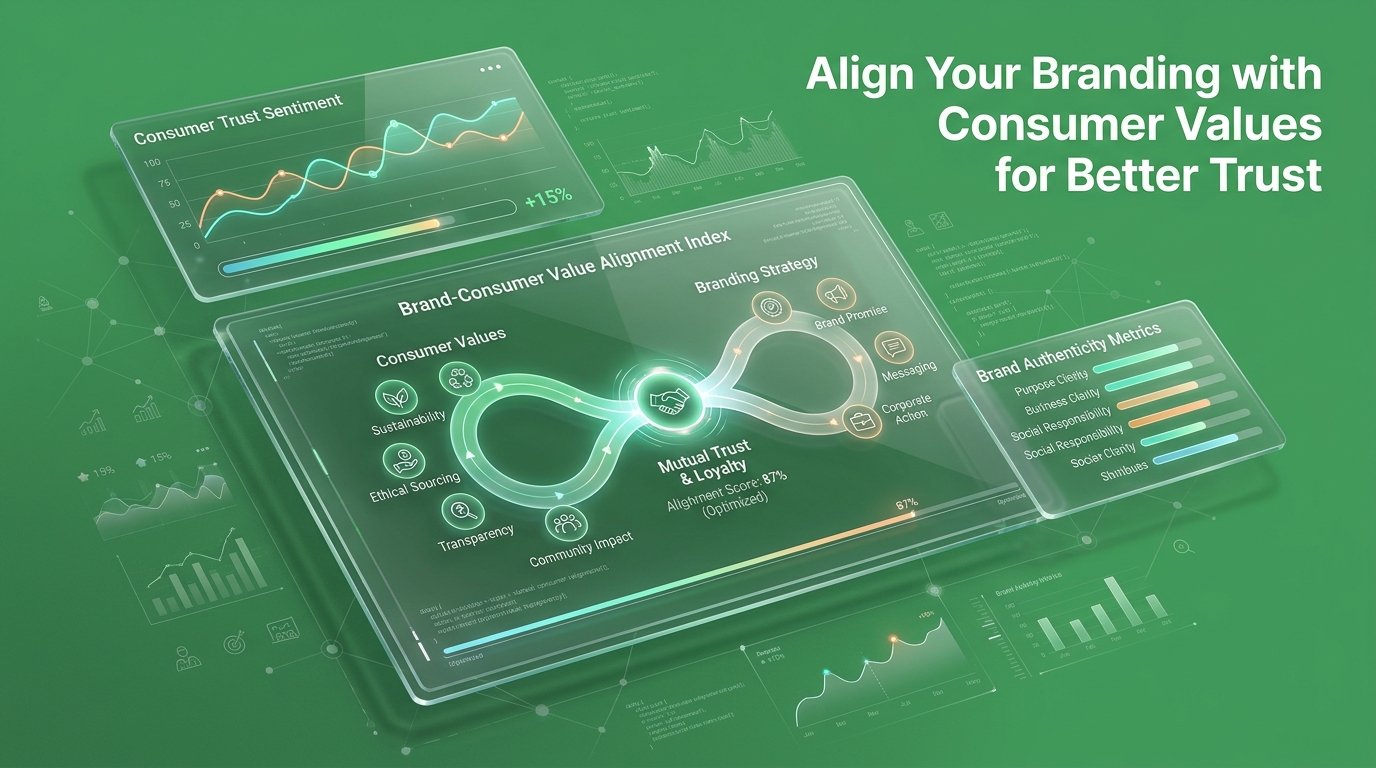
You’ve updated the mission statement. You’ve written the values on the wall. You talk about purpose in every pitch deck. And somehow, your conversion rate is flat, your client retention has a slow leak, and prospects still take three follow-up calls before they commit. The advice you’ll hear from most brand consultants: refine the messaging. Post more consistently. Make the website cleaner. None of that is the problem. The problem is a gap. A gap between what your brand claims to stand for and what your customers actually feel when they interact with you. And that gap is not invisible your audience senses it immediately, even if they can’t name it.
Trust isn’t built by saying the right things. It’s built when what you say and what you do are the same thing, everywhere, every time.
Your data dashboards track clicks, sessions, and drop-offs, but they miss the invisible friction of a trust gap. When prospects stall after a proposal or require multiple follow-up calls, it is rarely a pricing problem. It is a misalignment problem. Your audience senses a contradiction between your marketing claims and their actual experience, quietly killing your conversion rate.
Here’s what’s happening in the market right now.
According to the 2025 Edelman Trust Barometer Special Report on Brand Trust, 80% of people say they trust brands they use more than they trust governments, media, or even their employers. That sounds like good news for brands. It isn’t.
Because that same report shows the trust consumers extend to brands is increasingly conditional. It depends on cultural fit, personal values alignment, and consistent behavior across touchpoints. Trust in a brand isn’t granted it’s earned through repetition. And most brands are spending money on visibility while ignoring the thing that actually converts visibility into belief.
Visibility gets attention. Credibility earns action.
The brands struggling with trust right now aren’t struggling because they’re bad companies. They’re struggling because they’ve been taught to invest in channels instead of alignment. They run the ads, post the content, build the funnel and then wonder why their numbers feel disconnected from their effort. The missing piece is almost always values alignment. And it’s not a soft concept. It has hard commercial consequences.
Most businesses treat brand values as a branding exercise. Write a list of words. Put them on the About page. Refer to them in the company retreat. What the data actually shows is that values alignment is a direct revenue driver and the gap between brands that have it and brands that don’t is measurable.
Edelman’s 2024 research on consumer brand decisions found that 84% of U.S. consumers say they only buy from brands that share their personal values. 60% of consumers are actively buying or boycotting brands based on alignment with their beliefs. These aren’t small numbers they’re near-majorities making economic decisions based on what a brand stands for, not just what it sells.
And from a consistency angle: research consistently shows that companies that maintain branding consistency see revenue grow by up to 23%. Not because consistency is aesthetically nice because consistent brands feel reliable, and reliability is the foundation of trust.
Your brand values aren’t philosophy. They’re infrastructure.
When a customer encounters your brand three times in a row and each time it feels, sounds, and behaves like the same entity one with a clear point of view they start to trust it. Not consciously. It happens beneath the surface. The brain pattern-matches. Repetition becomes recognition. Recognition becomes credibility. Break that pattern anywhere inconsistent messaging, a campaign that feels off-tone, a customer service interaction that contradicts your ‘people-first’ values and the trust you built across 12 touchpoints can crack in one.
This is not about adding purpose to your marketing. It’s about engineering alignment across your brand system so that trust compounds instead of leaking. Here’s how we approach it.
Before any strategy, any rebrand, any campaign do the audit. Pull up your website, your three most recent ad campaigns, your email sequences, and your social profiles. Read them as if you’re a first-time visitor who knows nothing about your company. Ask honestly: do these all feel like they came from the same mind? Do they reflect the same set of beliefs? Does a customer who discovers you through a paid ad and then lands on your homepage feel a coherent identity or does it feel like two different brands stitched together?
This is the kind of brand strategy audit we run before touching a single creative asset. Most businesses skip it and go straight to execution. That’s why the execution doesn’t hold.
You can’t build trust on top of incoherence.
Values alignment starts with knowing what your values actually are not what sounds good in a pitch deck. Most brands have borrowed their positioning from the category. They say what everyone in their space says. The brands that build real trust have a genuine point of view. Something they believe that their competitors don’t say. Something slightly uncomfortable to say out loud. That specificity is what makes a brand feel real and real brands earn trust in a way that templated brands never can.
Ask yourself: what do we believe about our industry that most people in it won’t admit? That’s your starting point.
Once you know what you stand for, do a full touchpoint audit against those values. This means:
Trust is the sum of every experience someone has had with your brand. Not just the marketing.
One of the fastest ways to close the trust gap is to stop publishing content that could have come from any brand in your space. Informational content educates. But perspective-driven content earns trust because it shows the customer who you are, what you believe, and whether your worldview matches theirs. That match is what makes someone choose you over a competitor with a similar offer and similar price.
This is where a real content marketing strategy does more than drive traffic. It builds the audience’s sense of who you are consistently, over time, across topics.
Here’s the hardest part of values alignment and the most important. None of the above matters if your product or service experience doesn’t match the brand promise. The fastest way to destroy trust is to deliver something that contradicts what you’ve been saying. This isn’t a brand problem at that point. It’s an operational alignment problem. The brand team says ‘premium, personal, fast.’ The delivery team runs a template process with a two-week lag and a generic onboarding email.
The consumer doesn’t separate these. To them, the brand is every experience they’ve had. The gap between promise and delivery is exactly where trust dies quietly, without complaint, and often without the brand ever knowing.
If your values aren’t felt in the delivery, they’re just decoration.
Here’s the uncomfortable thing about the trust gap: it doesn’t show up in your dashboard. You won’t see it in your click-through rate or your session duration.
It shows up in your win rate. In deals where you were the obvious choice on paper and still didn’t close. In the prospects who went quiet after the proposal. In the retention numbers that are quietly declining while acquisition keeps growing. These are trust signals and most businesses read them as sales problems when they’re actually brand problems.
The Edelman research cited earlier makes this vivid: 73% of consumers say their trust in a brand increases when it authentically reflects today’s culture meaning a brand with a genuine, legible point of view earns trust with nearly three-quarters of its audience just by being real. The other 27%? They were already going to make it about the product anyway. You can’t win them with values but you’re not losing them without values either. You’re losing the 73% by being invisible.
The trust gap isn’t a marketing problem. It’s a brand architecture problem.
At “TheMayk”, we don’t touch ad accounts, content calendars, or brand visuals until we’ve done the alignment work first. Because we’ve seen what happens when you skip it campaigns that spend well and convert poorly, content that generates engagement but not clients, brands that look great and still feel hollow.
The brands that actually scale aren’t the ones with the best creative or the highest ad budgets. They’re the ones where every piece of the system the brand strategy, the content, the paid media, the website experience all run the same operating system. The same point of view. The same values signal. Everywhere the customer goes.
That’s what trust compounding looks like. And it starts with the alignment work most brands skip.
If your brand is saying the right things but your numbers don’t match let’s find where the gap is.
Book a free strategy session at www.themayk.com and we’ll audit exactly where your brand and your customer’s expectations are misaligned.
Stop guessing. Start growing.
Because in 2026, the difference between a “No” and a “Yes” isn’t your tech stack it’s the human strategy behind it. Let’s turn your digital ghost town into a conversion machine.
How to Avoid Regret Buying the Xbox Nano Controller The Xbox Nano Controller is $49.99, pocket-sized, and open for pre-order. The headlines make it sound like…
Is the Xbox Nano Controller Actually Comfortable? You’ve read the headlines: five inches, 3.5 ounces, $49.99, all 18 inputs. Everyone’s calling it cute. Nobody’s answered the…
How to Master Social Media Marketing Fast You are posting three times a week on Instagram and LinkedIn. Your designer makes pristine templates, and your team…
How we use your info: Used strictly to review your project, prepare tailored insights, and reach out for a 1-on-1 strategy call. Zero spam, zero shared data.