
How to Avoid Regret Buying the Xbox Nano Controller
How to Avoid Regret Buying the Xbox Nano Controller The Xbox Nano Controller is $49.99, pocket-sized, and open for pre-order. The headlines make it sound like…
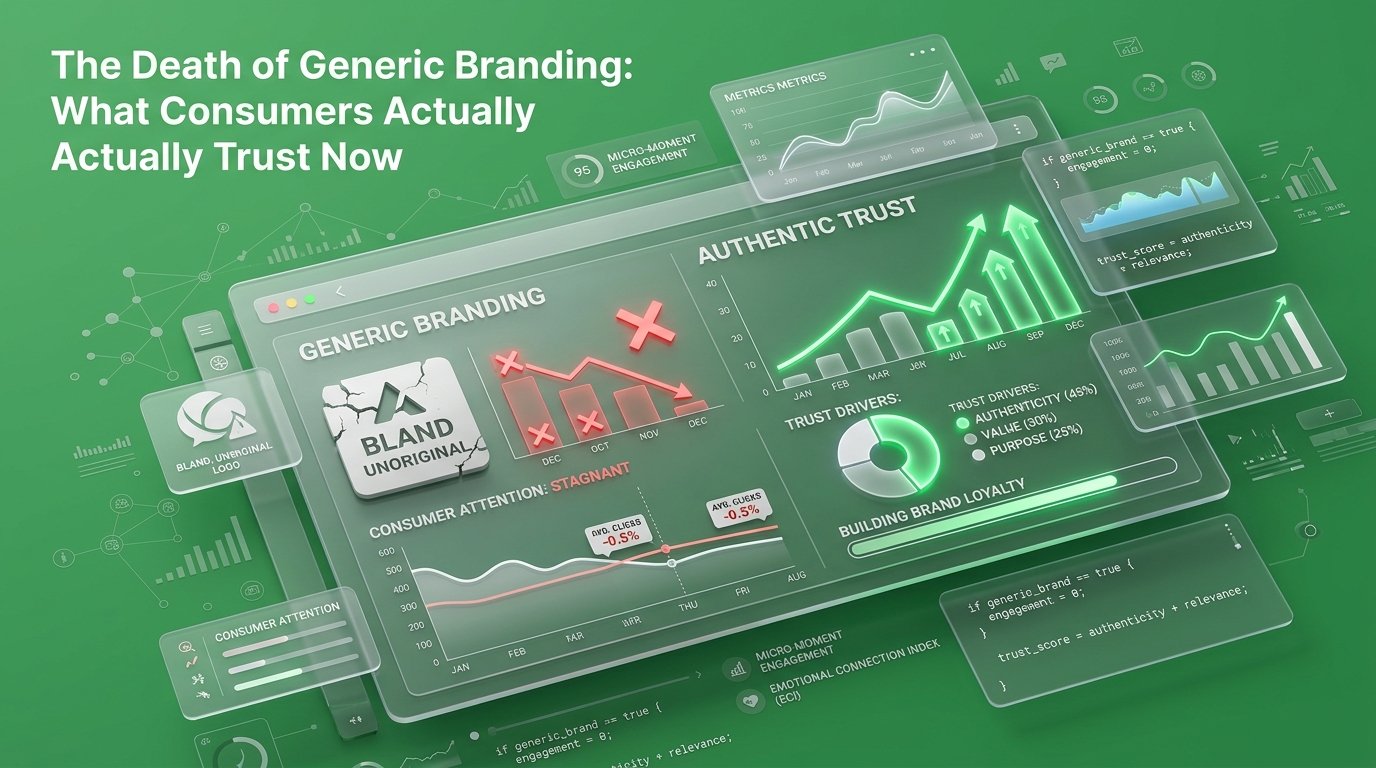
Most businesses think they have a branding problem. They don’t. They have a trust problem. And they’ve been solving it wrong.
They redesign the logo. They tweak the color palette. They hire someone to “refresh the messaging.” And then they wonder why nothing changes why their ads still don’t convert, why their website still feels cold, why potential clients still bounce after 20 seconds.
Here’s what’s actually happening: consumers have gotten smart. Not “smarter than before” smart. Functionally immune to generic. And if your brand speaks in the language of every other brand in your category, you’ve already lost them before they’ve read a single word.
Before a visitor reads your content, they make a judgment about your credibility. Reviews, author expertise, brand mentions, consistent messaging, and proven results all shape that decision. These trust signals influence whether someone clicks, stays, shares, or converts. While rankings may bring visitors to your site, trust determines what happens next. The brands winning organic growth today understand that visibility gets attention, but credibility earns action and that’s where sustainable SEO performance is built.
Five years ago, you could get away with clean design and a vague value proposition. The bar was low. Attention was cheaper. Consumers were still forming habits around online discovery. That window has closed.
According to the 2025 Edelman Trust Barometer Special Report on brand trust, 73% of consumers say their trust in a brand increases when it authentically reflects today’s culture and only 27% say trust increases when a brand ignores culture and focuses solely on products. Read that again. A brand that just shows up and sells is losing credibility with nearly three-quarters of its audience by default.
This isn’t a trend. It’s a permanent shift. Consumers are no longer asking “is this product good?” They’re asking “do I trust the people behind this product?” And the answer to that second question is shaped almost entirely by your brand not your ad spend.
Generic branding doesn’t just fail to build trust. It actively destroys it.
Generic branding isn’t about being ugly. Some of the most generic brands have beautiful design. It’s about being indistinct. It’s when a consumer looks at your brand and can mentally swap in any one of your ten closest competitors without feeling a single thing differently.
Here’s what it looks like:
If your brand could belong to anyone, it belongs to no one.
This is what we see almost every time a new client walks into a brand strategy conversation with us. The assets are fine. The execution is fine. But there’s nothing to hold onto no friction, no distinctiveness, no reason to remember. And a brand nobody remembers is doing nothing for your business.
Here’s the uncomfortable truth about what’s changed: people can feel the difference between a brand that was built and a brand that was templated.
It’s not always conscious. Most consumers can’t articulate it in a focus group. But it shows up everywhere in the data.
Salsify’s 2025 Consumer Research found that 87% of shoppers will pay more for a product from a brand they trust. Trust. Not the best price. Not the fastest shipping. The brand they trust. And 54% of those same consumers have abandoned a purchase because product content was inconsistent across channels meaning if your brand doesn’t feel like the same entity everywhere people encounter it, you’re bleeding revenue silently.
That’s not a content problem. That’s a brand architecture problem. A brand that wasn’t built to have a consistent identity will always leak. And leaking brands keep spending more on ads to compensate which is exactly why most businesses in this position feel like their marketing costs keep rising while results stay flat. The problem isn’t the ads. It’s what the ads are pointing to.
So what does the other side look like? What are the brands that have figured this out doing differently?
Three things, consistently.
A “position” is “we sell premium skincare for women over 35.” A point of view is something your brand believes and is willing to say out loud, even if it pushes some people away. Consumers, especially Gen Z and millennials, are increasingly making buy-or-boycott decisions based on brand values. The research from Edelman’s 2024 Special Report shows that 71% of global consumers use brand trust as a “buy or boycott” factor. If your brand doesn’t stand for something legible, you’re leaving that decision up to chance.
This one is simple and consistently ignored. A brand that sounds like a committee wrote it will never build the emotional connection that drives loyalty. The brands winning trust right now sound like real people with opinions. They use language that actually reflects how their customers think and speak. They’re willing to have a personality.
That personality doesn’t happen by accident. It comes from a brand strategy built around a specific audience’s psychology not a generic “target demographic.”
Trust is a repetition game. Consumers need multiple exposures to the same brand signal before it registers as reliable. That means the visual identity, the tone, the messaging hierarchy, and the experience across every touchpoint your website, your ads, your social, your packaging, your email sequences have to be running the same operating system.
Brands that get this right start compounding. Every touchpoint reinforces the last. Every interaction makes the next one easier to believe.
Here’s something that should make every marketing manager uncomfortable: most brands dramatically overestimate how trusted they actually are.
Twilio and Cisco data cited in multiple 2025 brand research summaries shows that 79% of B2C leaders believe their customers trust their brand but only 52% of consumers agree. That’s a 27 point trust gap between how businesses perceive themselves and how they’re actually perceived.
That gap lives in the brand. Not in the product. Not in the service. In the brand.
Which means you can have a genuinely excellent business real results, happy clients, a strong offer and still be losing deals because the brand signals “ordinary” before the conversation even starts.
This is what we call a silent leak. It doesn’t show up in your analytics. It shows up in your win rate. In the “I went with someone else” emails. In the clients who never respond to the follow up.
The fix isn’t more marketing. It’s a brand that earns trust before you ask for anything.
If you’ve read this far, you already know your brand probably has at least some of this problem. Here’s how to start thinking about fixing it.
Go to your website, your social profiles, and your ads. Then go to your three biggest competitors. Screenshot everything. Put them side by side. Ask honestly: if the logos were removed, which one is different? If yours doesn’t stand out in 10 seconds that’s your baseline problem.
Every business has a genuine perspective shaped by real experience. The problem is most brands smooth that out in pursuit of being broadly appealing. Stop doing that. What do you actually believe about your industry that most players don’t? What would you say at a dinner party that you don’t say on your homepage? Start there.
Most brands use content to educate. The brands winning right now use content to signal. Every post, every blog, every video should reinforce something about how you see the world. Information is a commodity. Perspective is a differentiator.
This one is underused by 90% of brands still operating with static imagery. The businesses consistently outperforming in their category are investing in immersive visual experiences not because they’re pretty, but because they signal premium, they create desire before the sale, and they make a brand feel larger than it is. That perception shapes trust.
The bottom line for businesses that are serious about this Generic branding doesn’t fail loudly. It fails quietly, in the decisions consumers make before they ever talk to you. You’re not just competing on product or price anymore. You’re competing for a position in someone’s mental shortlist and that shortlist is built almost entirely on brand signals. Signals they pick up in two seconds on your homepage. Signals they get from your Instagram grid. Signals your ad creative sends before they’ve read the copy.
At “TheMayk”, this is the exact problem we’re built to solve. We don’t refresh logos. We build brand systems that make businesses impossible to ignore systems that work together across paid media, SEO, content, and design to compound trust over time. Not guesswork. Not templates. Systems.
If your brand is blending in when it should be standing out, let’s fix that. Book a free strategy session at www.themayk.com.
Stop guessing. Start growing.
Because in 2026, the difference between a “No” and a “Yes” isn’t your tech stack it’s the human strategy behind it. Let’s turn your digital ghost town into a conversion machine.
How to Avoid Regret Buying the Xbox Nano Controller The Xbox Nano Controller is $49.99, pocket-sized, and open for pre-order. The headlines make it sound like…
Is the Xbox Nano Controller Actually Comfortable? You’ve read the headlines: five inches, 3.5 ounces, $49.99, all 18 inputs. Everyone’s calling it cute. Nobody’s answered the…
How to Master Social Media Marketing Fast You are posting three times a week on Instagram and LinkedIn. Your designer makes pristine templates, and your team…
How we use your info: Used strictly to review your project, prepare tailored insights, and reach out for a 1-on-1 strategy call. Zero spam, zero shared data.