
How to Avoid Regret Buying the Xbox Nano Controller
How to Avoid Regret Buying the Xbox Nano Controller The Xbox Nano Controller is $49.99, pocket-sized, and open for pre-order. The headlines make it sound like…
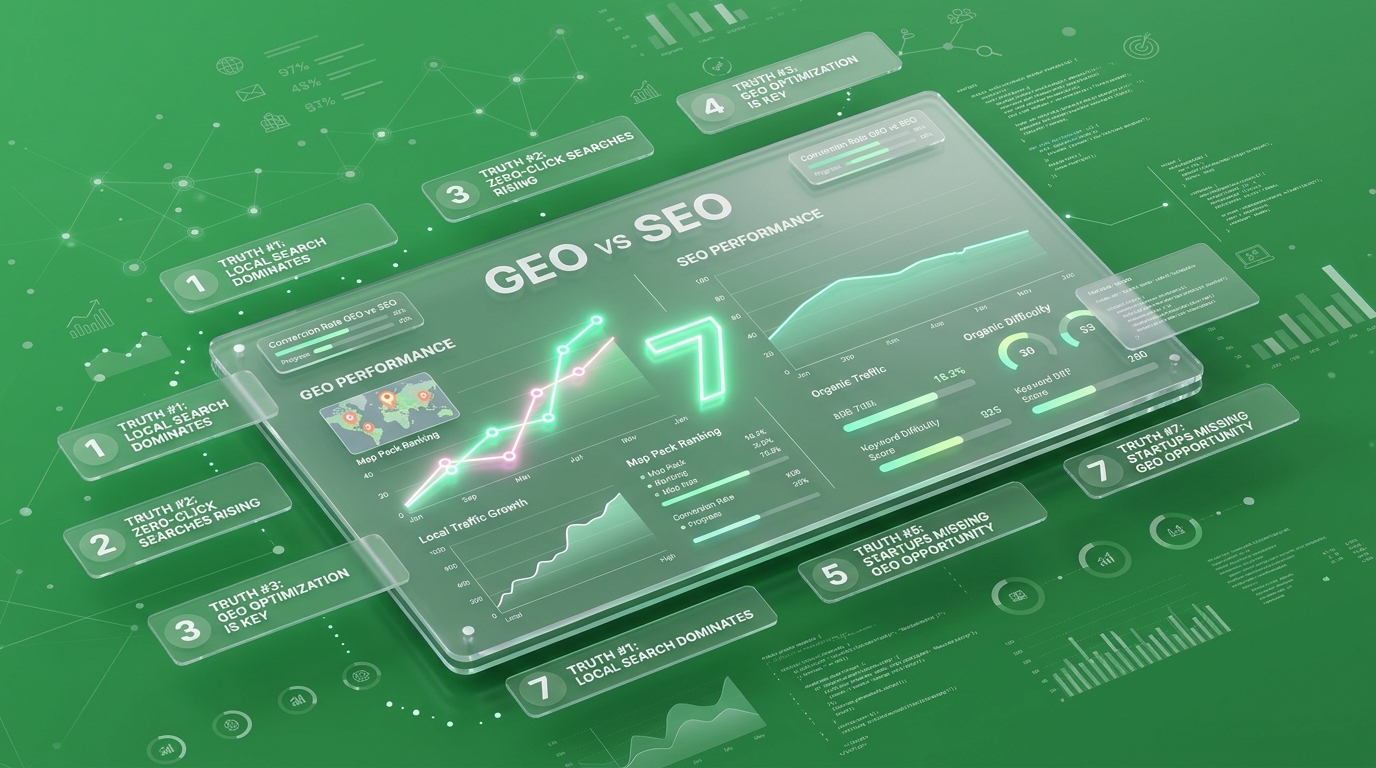
You’ve been building your SEO strategy for months. Maybe years. Good content, solid backlinks, keyword targeting that your agency swears is dialled in. And then someone on your team opens ChatGPT, searches for exactly what you sell and your brand isn’t there.
Not buried on page three. Just not there. Like you don’t exist.
That’s not a fluke. That’s the gap between SEO and GEO and in 2026, it’s getting wider by the month. Here’s what most startup founders and marketing leads are missing: this isn’t about choosing one over the other. It’s about understanding that search itself has split into two different games, and playing only one means you’re invisible to a massive and fast-growing audience.
Traditional SEO gets you into the index, but only GEO secures your place in the conversation. As AI-driven answers become the primary interface for B2B and B2C buyers alike, the startups that prioritize structured data, authoritative citations, and frequent content refreshes will dominate the next decade. Don’t let your brand become a ghost in the machine optimize for intelligence.
Traditional SEO was designed around one core behaviour a person types words into Google, gets a list of ten blue links, and clicks one.
That behaviour is changing fast. According to Gartner, traditional search engine volume is projected to drop 25% by 2026 as AI chatbots and virtual agents absorb more queries. And as of Q1 2026, 25.11% of all Google searches are now triggering an AI Overview up 57% from just three months prior.
But the bigger shift is happening off Google entirely. ChatGPT hit 900 million weekly active users by early 2026 and those users aren’t getting a list of links. They’re getting answers.
Your startup could have the #1 organic ranking on Google and still be completely invisible in the conversation where your next client is making their buying decision.
Most startups don’t know this is happening. And the ones who do aren’t sure what to do about it.
Here’s where most of the confusion starts. People hear ‘GEO’ and think it replaces SEO. It doesn’t. Think of it more like this:
SEO gets you in the room. GEO gets you the floor.
There’s a critical data point that explains why both matter. Research from Incremys shows that 99% of AI Overview citations come from the organic top 10 results, and 87% of ChatGPT citations correspond to top Bing results.
Translation: if your SEO foundation is broken, GEO won’t save you. But if your SEO foundation is solid and you haven’t optimised for GEO, you’re doing half the job.
The other thing most people miss is where the AI traffic actually goes once it arrives. Data from Adobe Analytics found that AI-referred shoppers convert 31% higher and have 27% lower bounce rates compared to other organic sources.
People who find you through AI search aren’t casually browsing. They’ve already had a conversation with an AI that narrowed their options. By the time they land on your site, they’re ready to act.
That’s the real case for GEO: not just more traffic, but better traffic.
This is the one most founders feel before they understand it. Traffic is flat or declining even though rankings held. Why?
Because 60% of searches now end without a click. The answer was delivered inside the search interface no visit required.
The click rate on position #1 with an AI Overview present has dropped to just 2.6%. Ranking first used to mean traffic. Now it might just mean your content fed the AI that answered the question without ever sending the user your way.
Here’s the flip side though and this is where GEO changes the equation. When your brand is cited inside an AI-generated answer, you see a 38% lift in organic clicks and a 39% increase in paid ad clicks. Being the source is worth more than being the result.
This should be alarming. 47% of brands still have no deliberate GEO strategy as of late 2025. In one industry snapshot, 26% of brands had zero mentions in AI Overviews at all.
For startups, this is worse. You’re competing against established brands with years of domain authority, backlinks, and brand recognition built into the AI models’ training data.
But here’s what the data also shows: you don’t need to be the biggest brand to get cited. You need to be the clearest, most structured, most authoritative source on a specific topic.
Research from Princeton, Georgia Tech, and The Allen Institute found that comparison articles lead all content types with 32.5% of AI citations, followed by opinion pieces. Vague, generic content gets ignored. Specific, well-structured, data-backed content gets cited.
For a startup with deep domain expertise, that’s an opening.
This is good news. Most GEO optimisation doesn’t require a technical overhaul. It requires writing and structuring content differently.
Here’s what the research shows actually moves the needle:
Notice what’s on that list. None of it requires a new CMS, a new agency, or a six-figure budget.
This is the one that trips up teams who think GEO is a one-time project.
According to Semrush’s AI Visibility Index, 40–60% of cited sources in AI-generated responses rotate month over month. Brands that stop updating their content can lose AI citations within one to two months.
GEO isn’t set-and-forget. It’s a content operations discipline. The brands that maintain citation authority are the ones with a consistent publishing cadence, regular content updates, and a team that monitors what the AI is saying about them.
For startups with lean teams, this means prioritising depth over breadth. Five pieces of genuinely excellent, constantly maintained content will outperform fifty generic posts in the GEO game.
B2C gets most of the press on this stuff. But the B2B data is where things get really serious.
89% of B2B buyers now consider AI search a top source throughout the buying process. And AI-referred sessions in B2B SaaS grew 127% in just three months in 2025.
Think about what that actually means. When a procurement manager, a startup founder, or a Series A-stage operator is evaluating vendors they’re asking ChatGPT or Perplexity. They’re getting a short list. If you’re not on that list, you’ve lost the deal before the sales conversation even started.
B2B sales cycles are already won and lost in AI search. Most B2B teams are still optimising their email sequences.
This is the gap. And it’s widening every quarter.
The mistake is framing this as GEO versus SEO. It’s not a fork in the road. It’s two layers of the same visibility problem. Here’s how we think about the right sequencing:
This is the exact framework we apply at THEMAYK when we build an organic growth strategy for a scaling startup. SEO builds the foundation. GEO builds the visibility layer on top.
One without the other leaves money and market share on the table.
This is the compounding argument. And it’s the one that should make you move quickly.
The GEO services market was valued at $1.01 billion in 2025 and is projected to reach $17 billion by 2034. That growth curve tracks with adoption the earlier you build citation authority, the harder it becomes for competitors to displace you.
Citation authority, like domain authority, compounds. The brands that AI systems learn to trust and cite in 2026 will be the default recommendations in 2027 and 2028.
The window for early-mover advantage is still open. But it won’t be for long.
This might be the most useful thing in this entire article for founders who are watching their budgets.
GEO doesn’t reward ad spend. It rewards content quality, structural clarity, and authoritative sourcing. A five-person startup with genuinely deep expertise in their vertical can out-cite a 500-person enterprise that publishes generic thought leadership content.
Content with specific statistics, expert quotes, and clear sources gets cited most frequently across all major AI platforms. That’s not a function of budget. That’s a function of what you actually know and how clearly you can express it.
Startups have always been able to move faster and think more sharply than incumbents. GEO just gives them a new arena to prove it.
Most of your competitors haven’t started this. 47% of brands have no GEO strategy. The majority of B2B startups are still running playbooks that were written for a version of search that’s being replaced in real time.
That’s not a problem. That’s an opening.
At “TheMayk”, we work with founders and marketing leads who want to build organic visibility that works in the world that exists now not the one from three years ago. Our AI & Innovation services and organic growth strategies are built to close the gap between where your content is today and where your buyers are looking.
If you’re serious about not being invisible in AI search, let’s talk. Book a strategy call at www.themayk.com.
The era of “set-and-forget” SEO is over. As AI agents redefine how users discover solutions, your startup’s survival depends on bridging the gap between traditional search and Generative Engine Optimization. Don’t let your hard-earned authority vanish into zero-click voids. By structuring for clarity and maintaining a relentless update cadence, you can ensure your brand isn’t just indexed it’s actually recommended.
“TheMayk” is the bridge between the tech you use and the results you actually want. Don’t let your brand become a relic of the automation age. Let’s transform your strategy and bring your website back to life today.
Because in 2026, the difference between a “No” and a “Yes” isn’t your tech stack it’s the human strategy behind it. Let’s turn your digital ghost town into a conversion machine.
How to Avoid Regret Buying the Xbox Nano Controller The Xbox Nano Controller is $49.99, pocket-sized, and open for pre-order. The headlines make it sound like…
Is the Xbox Nano Controller Actually Comfortable? You’ve read the headlines: five inches, 3.5 ounces, $49.99, all 18 inputs. Everyone’s calling it cute. Nobody’s answered the…
How to Master Social Media Marketing Fast You are posting three times a week on Instagram and LinkedIn. Your designer makes pristine templates, and your team…
How we use your info: Used strictly to review your project, prepare tailored insights, and reach out for a 1-on-1 strategy call. Zero spam, zero shared data.