How to Avoid Regret Buying the Xbox Nano Controller
How to Avoid Regret Buying the Xbox Nano Controller The Xbox Nano Controller is $49.99, pocket-sized, and open for pre-order. The headlines make it sound like…
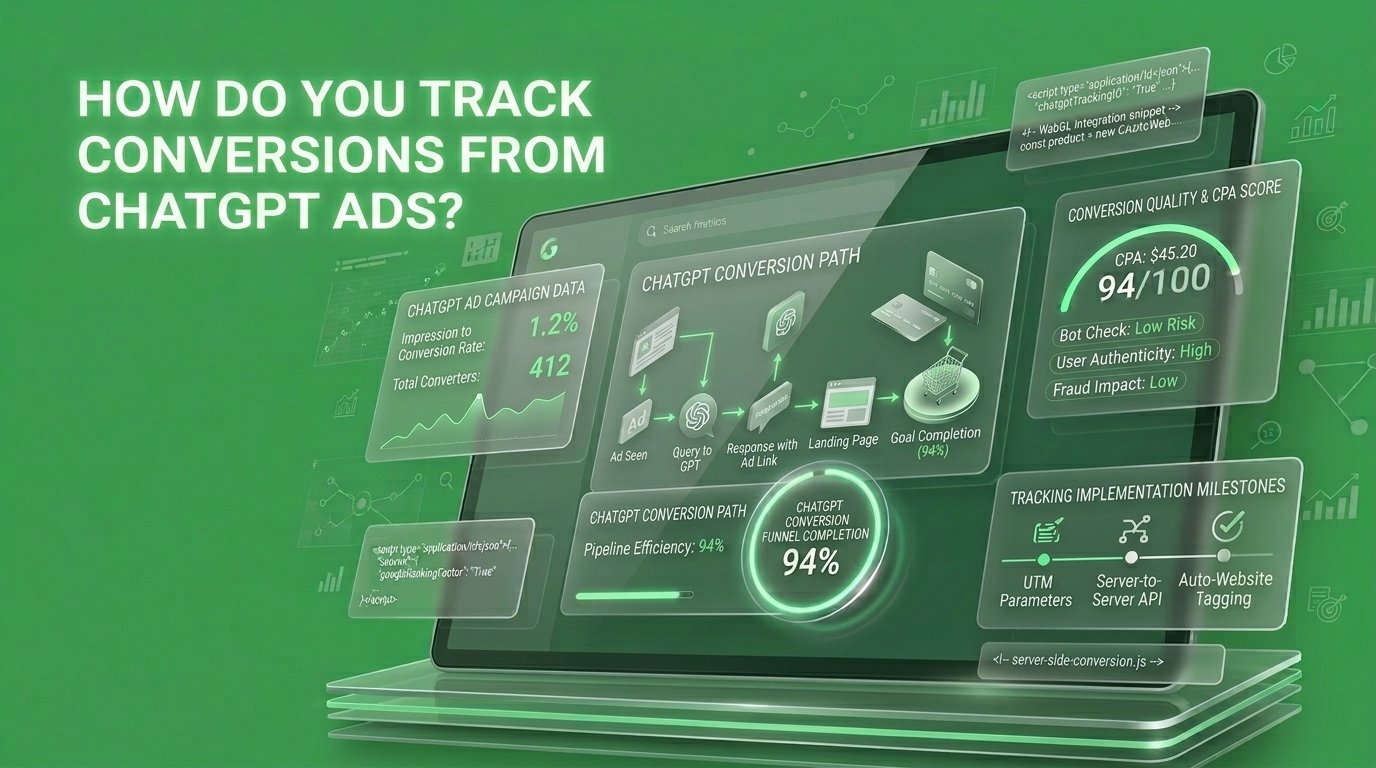
Your ChatGPT campaign is live. The spend is ticking up, the clicks look decent, and Ads Manager shows a number sitting in the conversions column. Then you check your CRM and the number doesn’t match. Someone on your team says “give it more time, the algorithm will figure it out.” It won’t. Not while the plumbing under that number is broken.
Here’s the part nobody tells you before you launch: you can’t optimize what you can’t measure, and ChatGPT Ads make measurement genuinely harder than Google or Meta ever did. If you want to actually track conversions from ChatGPT Ads not guess at them you need to understand why they go missing before you touch a single line of tracking code.
Fix your tracking stack before scaling your spend everything else compounds from there. TheMayk helps businesses bridge attribution gaps, implement server-side tracking, and turn broken ad reporting into trustworthy CRM data. When your analytics agree, your budget works harder and your bidding system optimizes toward real growth instead of platform noise. If your ChatGPT Ads numbers do not match your revenue, book a free audit call today at www.themayk.com.
OpenAI began testing ads inside ChatGPT with logged-in Free and Go tier users in the U.S. in February 2026, then opened a self-serve Ads Manager to U.S. businesses that spring, letting any verified advertiser set budgets, upload creative, and bid on a cost-per-click basis without going through an agency. That’s a fast rollout. Most advertising teams jumped in the same way they jump into every new channel: turn the campaign on, watch the click count, call it a win.
That approach worked, sort of, on Google. It fails quietly on ChatGPT.
The conversion number in your Ads Manager dashboard is not the truth. It’s the floor. Google’s model tracks a search, a click, and a landing page visit inside one continuous browser session. Meta’s pixel fires the moment a page loads and matches it to whoever clicked or viewed the ad in a defined window. ChatGPT doesn’t work like either one, and treating it like a smaller version of Google Ads is exactly how the reporting stops matching reality.
Most businesses don’t set up tracking correctly before they spend. They run the campaign, watch the clicks, and have no real idea whether any of it converted. That’s not marketing. That’s burning budget with extra steps.
A ChatGPT conversation isn’t a search query. Someone asks about a problem, gets a recommendation, sees a sponsored option, and closes the tab to think about it. They come back two days later through a bookmark, a branded search, or a direct URL typed from memory. Every one of those return paths shows up in your analytics as “direct” or “organic.” None of it credits the ad that actually started the decision.
That’s the gap most teams never account for, and it’s structural, not a bug you patch once. A click-to-conversion model built for search engines simply wasn’t designed for a conversational one.
This is why the base pixel alone was never going to be enough. Browser-only tracking loses ground to cookie restrictions, ad blockers, and any session that breaks between devices someone clicks on their phone during a commute and buys from their laptop that night. If your only measurement layer lives in the browser, that entire purchase vanishes from your reporting.
So what does that mean in practice? It means your job isn’t “install a pixel and walk away.” It’s building a measurement stack with more than one leg to stand on one that runs on the browser, one that runs on your server, and a shared identifier tying them together so OpenAI can deduplicate instead of double-counting. Get that right and the conversation gap shrinks. Skip it and you’re flying on partial data while telling your client or your CFO that the channel isn’t working.

This is the setup we run before a single dollar of client budget touches a ChatGPT campaign. No shortcuts, no “we’ll add tracking later.”
Inside Ads Manager, go to Tools, then Conversions, then Create a Data Source. Name it after your domain, keep the type set to Web, and you’ll get a setup snippet the base pixel. This goes in the site-wide header of every page, not just the landing page. Without it, nothing downstream gets attributed to anything.
Confirm page-view events are showing up in the OpenAI Event Stream as you browse your own site. If the base pixel isn’t firing cleanly, no conversion event built on top of it will attribute correctly either.
A page view isn’t a conversion. Set up the specific actions that matter lead form submitted, demo booked, purchase completed and map each one to a real business outcome, not just “button clicked.”
This sends conversion events server-to-server instead of relying on what survives in someone’s browser. It isn’t a no-code toggle; it needs a developer to implement the authenticated call. But it’s what keeps your numbers intact when a cookie gets blocked or a session dies mid-journey, and it’s what OpenAI itself points to as the measurement layer built alongside self-serve buying.
Fire a test conversion through both the pixel and the API and confirm it registers once, not twice, using a shared event ID. Skip this step and your reported conversion volume is inflated before you’ve even launched.
ChatGPT’s ad URLs don’t support dynamic parameters the way Google’s do, so build your UTM structure by hand and keep it consistent across every campaign. This is what lets your own analytics not just OpenAI’s confirm the traffic actually landed.
If the platform says twelve conversions and your CRM shows seven, don’t optimize around the twelve. Find the gap first. Treat every ChatGPT-attributed number as a floor, never the whole picture the same discipline that keeps a funnel audit honest on any channel.
Here’s where it gets interesting: once the pixel, the API, and your own analytics all agree, you’re not just measuring ChatGPT Ads anymore. You’re feeding the auction a clean signal, and OpenAI’s bidding system learns from exactly what you tell it. Broken tracking doesn’t just hide results it actively teaches the algorithm to chase the wrong outcome.
This is the same audit we run before we touch any new paid channel the pixel, the API, the UTM structure, and a direct line back into whatever CRM or dashboard the client already trusts. We built our behavioral tracking process around exactly this problem: a platform’s own dashboard is never the whole story, and businesses that treat it as gospel end up optimizing toward noise.
We’ve watched the same pattern play out on every new ad platform we’ve onboarded a client onto, from early Meta and Google account restructures to more recent work getting products discoverable inside ChatGPT’s shopping surfaces. The channel changes. The mistake doesn’t. Teams spend first and instrument later, then wonder why the numbers never add up.
Fix the tracking before you scale the spend. Everything else compounds from there.
If your ChatGPT Ads numbers don’t match what your business is actually seeing, let’s find out why. Book a free audit call at www.themayk.com.
Fix your tracking stack before scaling your spend everything else compounds from there. TheMayk helps businesses bridge attribution gaps, implement server-side tracking, and turn broken ad reporting into trustworthy CRM data. When your analytics agree, your budget works harder and your bidding system optimizes toward real growth instead of platform noise. If your ChatGPT Ads numbers do not match your revenue, book a free audit call today at www.themayk.com.
Because in 2026, the difference between a “No” and a “Yes” isn’t your tech stack it’s the human strategy behind it. Let’s turn your digital ghost town into a conversion machine.
How to Avoid Regret Buying the Xbox Nano Controller The Xbox Nano Controller is $49.99, pocket-sized, and open for pre-order. The headlines make it sound like…
Is the Xbox Nano Controller Actually Comfortable? You’ve read the headlines: five inches, 3.5 ounces, $49.99, all 18 inputs. Everyone’s calling it cute. Nobody’s answered the…
How to Master Social Media Marketing Fast You are posting three times a week on Instagram and LinkedIn. Your designer makes pristine templates, and your team…
How we use your info: Used strictly to review your project, prepare tailored insights, and reach out for a 1-on-1 strategy call. Zero spam, zero shared data.