How to Use 3D Visuals to Boost Brand Identity
how to Use 3D Visuals to Boost Brand Identity You paid for a set of 3D renders, and they’re gorgeous, but your brand still looks like…
Your last product photoshoot cost thousands of dollars, took three weeks to schedule, and you still don’t have a usable shot of your newest color variant. When starting out, poor visual assets are the quickest way to kill your return on investment, making TikTok advertising for beginners feel incredibly expensive and frustrating. If your agency’s only solution is to book another costly shoot, here is the truth: you don’t have a photography problem, you have an asset problem.
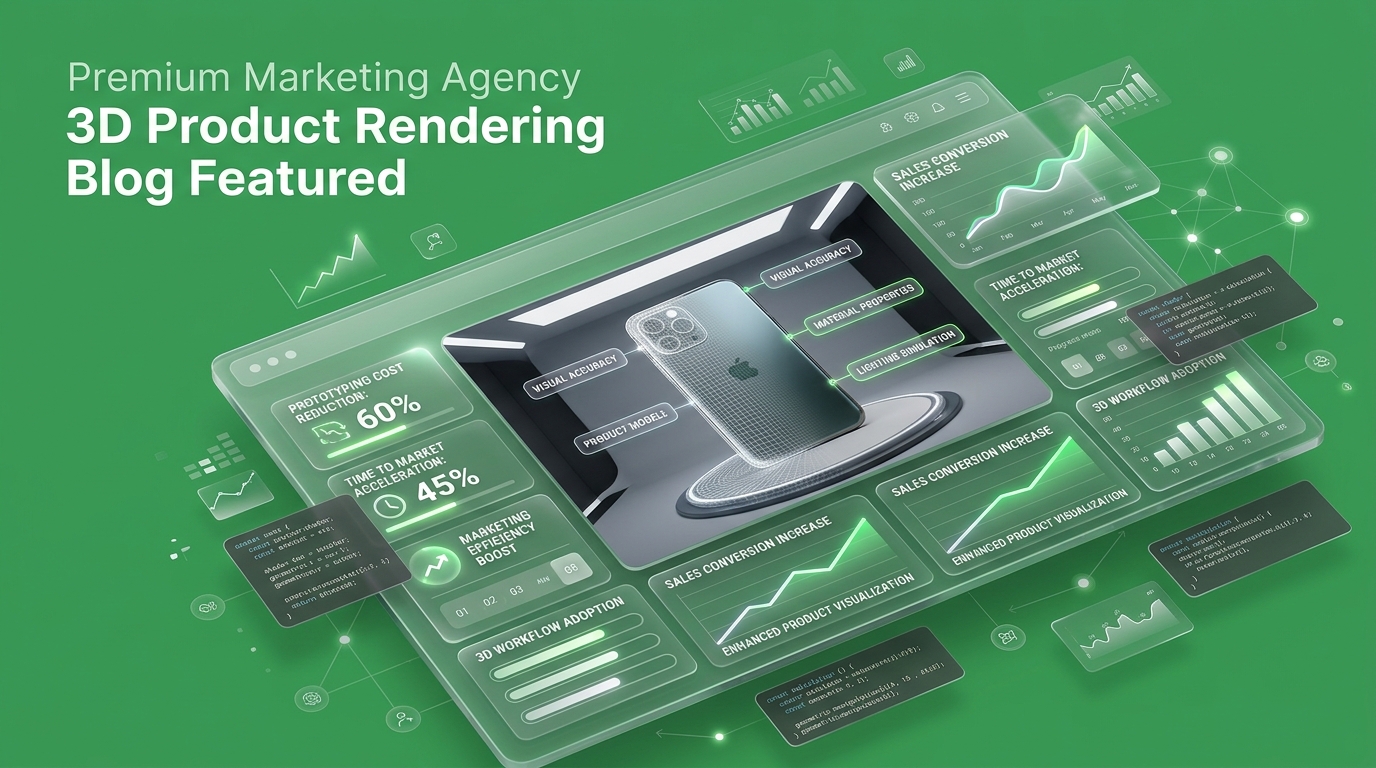
Fortunately, there is a faster, cheaper way to scale your creative. In this article, we will reveal how switching to 3D product rendering can slash your production times, lower your ad costs, and give you an endless supply of high-converting visuals. Let’s dive into how you can fix your asset problem today.
The photoshoot treadmill is an expensive bottleneck for growing brands. Switching to 3D product rendering transforms your visual production from a series of costly dead ends into a library of reusable digital twins. This shift doesn’t just cut production times and costs it actively drives revenue by boosting conversions by up to 94%, slashing returns, and providing a scalable foundation for all your future marketing channels.
Every time you launch a new SKU, add a color, or update packaging, you’re back on the same treadmill. Book a studio. Wait for a shoot date. Pay for props, lighting, retouching, and usage rights. Then wait again while someone edits five hundred raw images down to twenty usable ones.
None of that scales. A growing catalog means growing photo costs, not shrinking ones. And the moment you want that product shown at a new angle, on a lifestyle background, or animated for a paid ad you’re paying for an entirely new shoot.
That’s expensive. It’s also slow at the exact moment speed matters most: right before launch.
Most brands assume the fix is a better photographer or a bigger studio budget. It isn’t. A photograph is a dead end one angle, one lighting setup, one use case, captured once and then gone.
A 3D model is a living asset. Build it once from CAD files or a 3D scan, and you can generate unlimited angles, colorways, lighting setups, and backgrounds from that single file for web, for ads, for print, for an app without ever touching a camera again.
That’s the shift. You stop paying per photo and start owning a reusable digital twin of your product.
3D product rendering is the process of building a digital, computer-generated model of a physical product and then generating photorealistic images or video from it. The model is constructed from CAD data, 3D scans, or reference photos, then wrapped in materials, lighting, and textures that mimic how the real object looks under real conditions.
Once that model exists, a rendering engine calculates how light bounces off every surface the way it would in a real photo studio and outputs an image. The difference is you can move the lights, rotate the product, swap the material, or drop it into a completely different scene, all without rebuilding anything from scratch.
This is also the foundation for everything downstream:
One model. Every format your marketing team needs.
This isn’t just a production shortcut. It changes how customers buy.
Online shoppers can’t pick a product up, so they hesitate. 3D renders close that gap by letting a buyer rotate, zoom, and inspect a product the way they would in a store. Shopify’s own data on 3D commerce found that merchants who add 3D content to product pages see an average 94% lift in conversions compared to static images alone.
That’s not a rounding error. That’s the difference between a product page that converts and one that gets scrolled past.
There’s a second, quieter benefit too: fewer returns. When a shopper can genuinely see what they’re buying the exact finish, the exact proportions, the exact color they’re far less likely to open a return request over “it looked different in the photos.”
A better product page isn’t just prettier. It’s a conversion rate problem you can actually solve.
You don’t need to rebuild your entire catalog overnight. Start where the return on effort is highest.
Every point above answers the same question: does this action move a real number, or is it busywork? If it doesn’t move a number, skip it.
This is the audit we run for every new client before we build a single render — which SKUs are losing sales to weak visuals, and which ones would benefit most from a 3D pipeline first. It usually takes less than a week to map out.
Stop paying for a new photoshoot every time you launch a variant. Build the asset once and let it work everywhere. Talk to us at www.themayk.com.
Continuing to rely on the traditional photoshoot treadmill is an expensive, unscalable bottleneck for growing brands. By switching to 3D product rendering, you transform your visual production from a series of costly dead ends into a library of reusable digital twins. This shift doesn’t just cut production times and costs it actively drives revenue by boosting conversions, slashing returns, and setting the foundation for future-proof marketing.
Because in 2026, the difference between a “No” and a “Yes” isn’t your tech stack it’s the human strategy behind it. Let’s turn your digital ghost town into a conversion machine.
how to Use 3D Visuals to Boost Brand Identity You paid for a set of 3D renders, and they’re gorgeous, but your brand still looks like…
How to Improve Your SEO Rankings This Year You’re publishing every week, paying for SEO every month, and your rankings haven’t moved. Your agency says give…
How to subscribe to a service for building an online store? You found the platform. You’re about to hand over your card details and hit subscribe.…
How we use your info: Used strictly to review your project, prepare tailored insights, and reach out for a 1-on-1 strategy call. Zero spam, zero shared data.