How to Avoid Regret Buying the Xbox Nano Controller
How to Avoid Regret Buying the Xbox Nano Controller The Xbox Nano Controller is $49.99, pocket-sized, and open for pre-order. The headlines make it sound like…
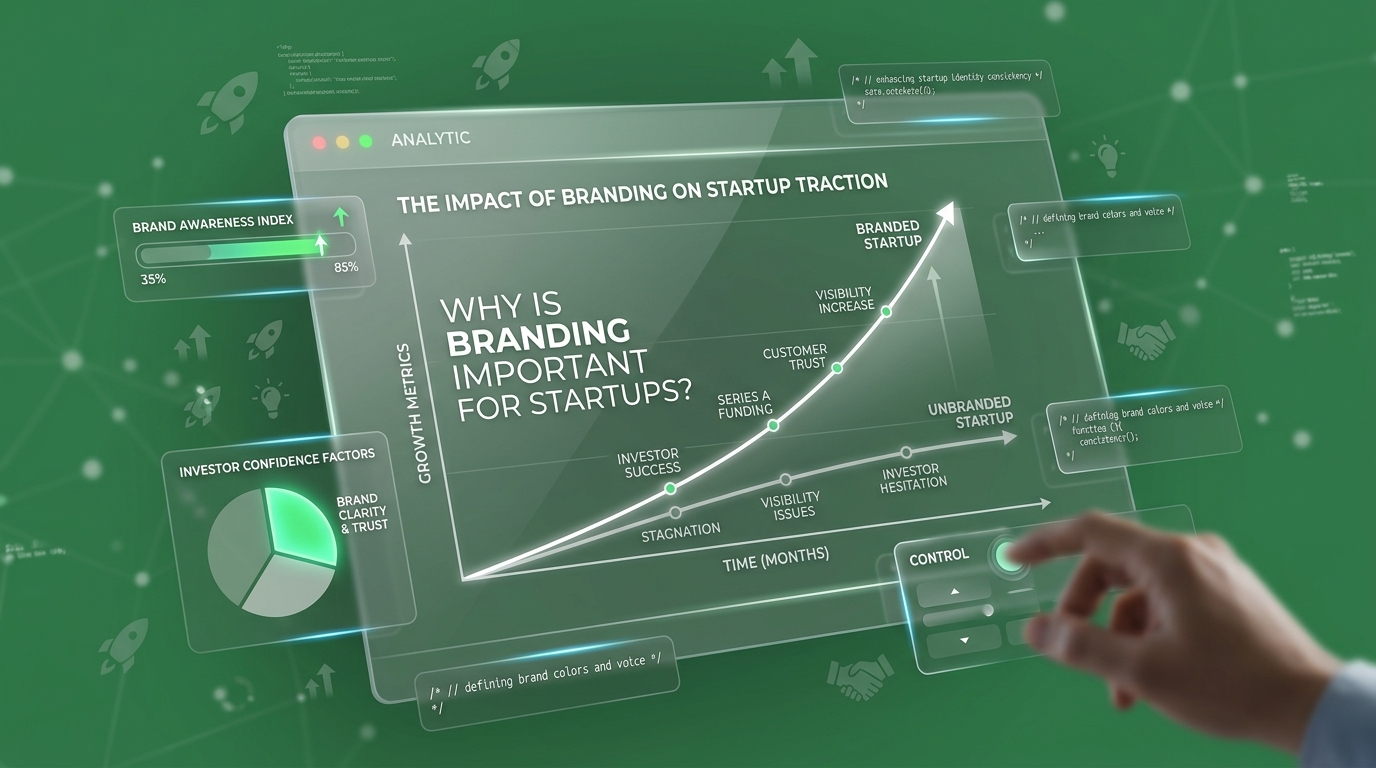
You launched with a real product. You’ve got a working website, a social media presence, maybe even some early customers. But growth is slower than it should be. Investors aren’t biting. Word-of-mouth isn’t spreading. Every new channel you try feels like starting from scratch.
So you hire another ads agency. You test a new funnel. You tweak the landing page copy again. Here’s what none of those agencies told you: execution without brand foundation is just expensive noise.
We’ve worked with enough founders at “TheMayk” to see the same pattern repeat itself smart teams burning real budget trying to outgrow a branding problem they’ve never named.
Most founders think their slow growth is a marketing issue. The truth is far more painful their brand is silently repelling customers before they even read the first line. In just 90 seconds, prospects have already judged you as “another generic startup” and moved on. While you’re busy optimizing funnels and testing ads, your weak branding is doing the real damage. It’s time to stop ignoring the invisible force costing you deals, investors, and momentum.
Think about the last time you bought from a brand you’d never heard of. Chances are, something made you trust them before you hit “buy.” Maybe it was the way the site looked. The tone of their copy. The clarity of what they stood for. You didn’t consciously evaluate all of it but your brain did, in about 90 seconds.
Research from the CCICOLOR Institute for Color Research found that consumers form a subconscious judgment about a brand within 90 seconds of first contact, and up to 90% of that assessment is based on visual presentation alone before a single word is processed.
That’s the gap most startups are ignoring.
They’re spending on traffic to a brand that hasn’t earned the right to convert yet. And then they call it a conversion problem.
Branding is not your logo. That’s the mistake that costs startups the most.
A logo is decoration. A brand is the operating system behind how people feel when they encounter your business on Instagram, on a cold email, on a sales call, on your website at 2am when your prospect is making a decision. The businesses that grow fastest in their first 24 months almost always have one thing in common: they look and sound like they’ve already arrived.
According to a Lucidpress State of Brand Consistency Report, companies that present their brand consistently across every touchpoint see up to 33% more revenue than those that don’t. That’s not a branding metric that’s a business metric. It means the way you look and sound is directly tied to how much money comes in.
Most startups treat branding as a Phase 2 project. Something to sort out after product-market fit. That’s backwards. You don’t get to product-market fit if no one trusts you enough to give real feedback, pay real money, or refer real people.
Here’s a number that should stop you: 81% of consumers say trust is a prerequisite before they’ll buy from a brand, according to Edelman’s Trust Barometer research.
Not “nice to have.” A prerequisite.
For a startup, that means you’re not fighting a product battle you’re fighting a credibility battle. And you can’t win a credibility battle with a generic Canva logo, an inconsistent color palette, and copy that sounds like it was written by a committee that couldn’t agree on anything.
The trust gap is the distance between what your product actually does and what your audience believes it can do for them.
Most startups have a wide trust gap. Their product is solid. Their branding makes them look like a side project. That gap is where conversions die, where investors pass, where referrals don’t happen. Closing it isn’t about spending more on ads. It’s about building a brand strong enough that the trust transfers before the conversation even starts.

Let’s get specific. Here’s what a real brand strategy actually buys you not the theory version.
It collapses your sales cycle. When someone has already seen your brand in multiple places, heard your positioning clearly, and felt like they understood who you are the sales conversation is shorter. They’re not doing due diligence; they’re confirming a decision they’ve already made.
It makes every marketing channel more efficient. Paid ads, SEO, email, content all of it performs better when the brand underneath it is clear. You’re not just buying traffic. You’re buying traffic that lands somewhere that converts. If your conversion rate optimization isn’t working, your branding is often the reason why.
It gives you pricing power. A generic-looking brand competes on price. A well-positioned brand competes on value. That’s the difference between discounting to close a deal and raising prices because the market believes you’re worth it.
It compounds over time. Every piece of content, every ad, every email, every partnership it all deposits into the brand equity account. Over 12 to 24 months, a startup with strong brand clarity starts pulling leads that their competitors have no explanation for. The brand is doing the work before the sales team even shows up.
We’ve audited dozens of early-stage startups at “TheMayk”. The branding failures almost always come down to two root causes.
A founder hires a designer, gets a logo and a color palette, and calls it branding. Six months later, the social media looks different from the website, the pitch deck looks different from the social media, and the sales team is using five different versions of the company tagline.
That’s not a brand. That’s a visual identity with no infrastructure around it.
Real branding is a system a consistent set of visual, verbal, and strategic decisions that govern how the company presents itself everywhere, always. Our brand strategy and visual identity work is built around this premise. The deliverable is never just a logo. It’s the whole operating system.
“We help businesses grow.” Great. So does every other company on the internet.
The startups that cut through noise have a position that’s sharp enough to make some people say “that’s not for me” and that specificity is exactly what makes the right people say “this is exactly for me.” If your brand isn’t excluding anyone, it’s not positioned well enough to attract anyone.
A startup that invested in brand early doesn’t need to explain itself on every call. Their website does the work. Their content sounds like a person, not a press release. Their visual identity is consistent enough that someone who saw their ad last month recognizes them when they show up in search. That recognition compounds into trust. That trust compounds into conversion. That conversion compounds into referrals.
This is the actual growth loop and branding is what starts it.
We’ve seen it with founders who came to us looking like every other startup in their category and left with a brand clear enough to command attention and convert on first contact. Not because we made them prettier because we made them unmistakable.
The market doesn’t reward the best product. It rewards the product that feels like the obvious choice.
If your startup’s branding hasn’t been built with intention meaning you’ve never sat down and defined exactly who you are, who you’re for, what you stand for, and how that shows up everywhere start there.
Don’t start with another ad campaign. Don’t start with another content push. Start with the foundation, because everything you spend on top of a weak brand is money that’s working below its potential.
Audit your brand first. Look at your website, your social media, your pitch deck, your email signature. Does it all feel like it came from the same company? Does it make the right person feel like you’re talking directly to them? Does it build enough trust to earn the next step?
If the answer to any of those is no that’s the leak. Fix it before you pour more budget into channels that are going to underperform because of it.
We run brand and conversion audits for startups at exactly this stage. It takes less time than another failed ad test, and it usually uncovers the real reason your marketing spend isn’t performing the way it should.
Your brand is either working for you or against you there’s no neutral ground.
Stop guessing on channels. Build the brand that makes every channel work harder. Let’s talk at www.themayk.com.
Your product might be ready, but if your brand doesn’t inspire belief, growth will remain an uphill battle. Stop treating branding as an afterthought. Build a strong, consistent identity that instantly communicates trust, clarity, and value. When your brand becomes unmistakable, every channel, campaign, and conversation starts working harder for you. The market rewards the obvious choice make sure that’s you.
Ready to close the trust gap? Visit www.themayk.com today.
Stop burning budget on ads that don’t convert. Build a brand that makes people believe and buy.
How to Avoid Regret Buying the Xbox Nano Controller The Xbox Nano Controller is $49.99, pocket-sized, and open for pre-order. The headlines make it sound like…
Is the Xbox Nano Controller Actually Comfortable? You’ve read the headlines: five inches, 3.5 ounces, $49.99, all 18 inputs. Everyone’s calling it cute. Nobody’s answered the…
How to Master Social Media Marketing Fast You are posting three times a week on Instagram and LinkedIn. Your designer makes pristine templates, and your team…
How we use your info: Used strictly to review your project, prepare tailored insights, and reach out for a 1-on-1 strategy call. Zero spam, zero shared data.