How to Avoid Regret Buying the Xbox Nano Controller
How to Avoid Regret Buying the Xbox Nano Controller The Xbox Nano Controller is $49.99, pocket-sized, and open for pre-order. The headlines make it sound like…
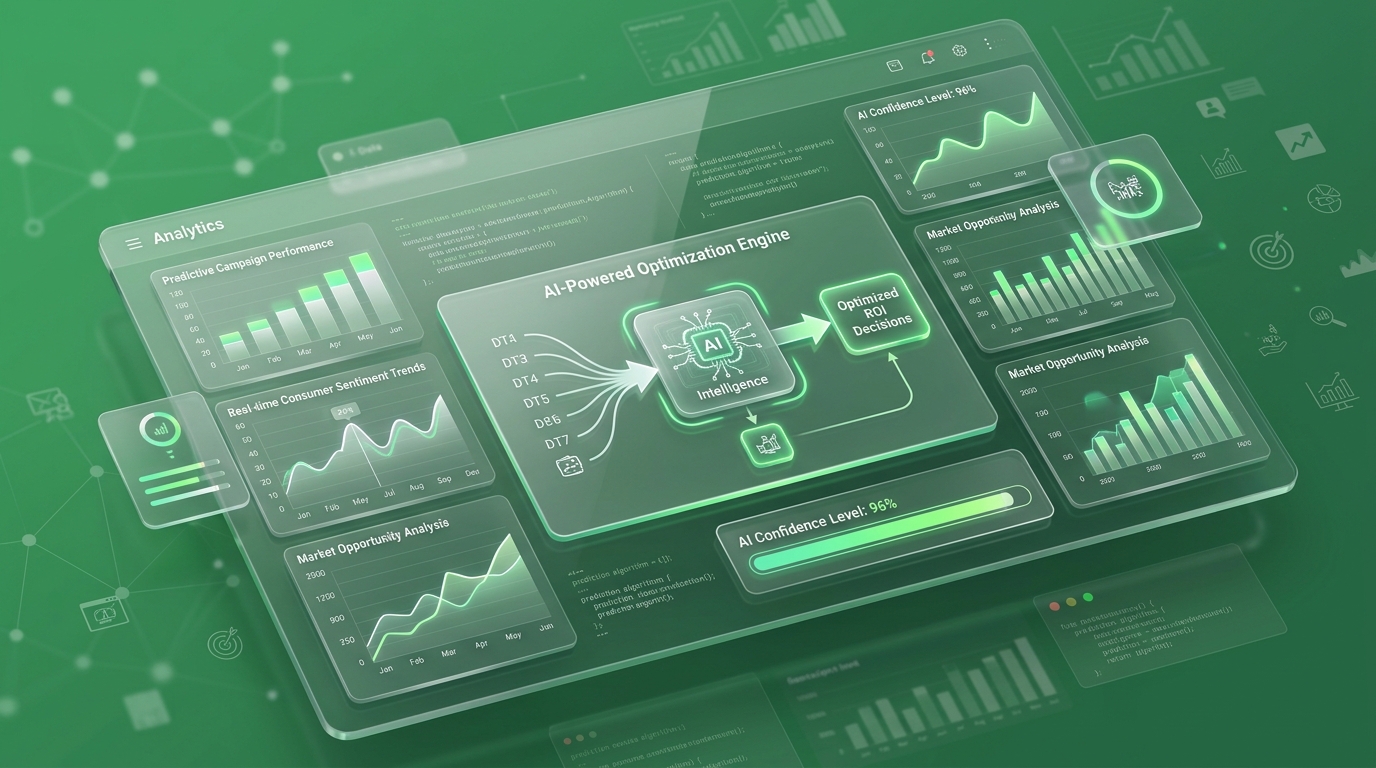
You’re sitting on more data than your business has ever had. CRM records, ad analytics, customer behavior logs, funnel drop-off rates, sales call recordings. The information is all there. And yet, the critical calls where to allocate budget, which segment to go after next, whether to kill or scale a campaign still get made in a boardroom based on gut instinct and whoever talks loudest.
That’s not a leadership problem. That’s a system problem. And AI solves it if you use it right.
“Most businesses think AI is for content. The ones pulling ahead are using it for decisions. That’s where the real gap is opening up.”
While your competitors are using AI to predict outcomes, spot risks early, and allocate budgets with confidence, most businesses are still making high-stakes decisions based on gut feel, outdated reports, and meeting debates. This invisible gap is quietly costing millions in missed opportunities, wasted ad spend, and lost market share. In today’s environment, relying solely on human instinct is no longer a leadership style it’s a competitive disadvantage. The businesses pulling ahead aren’t smarter; they’ve simply built AI into their decision layer.
Here’s what we see constantly when we work with growth-stage companies: they’ve invested in dashboards. They have Google Analytics, a CRM, maybe Hotjar or Mixpanel running in the background. The data infrastructure is there. But ask them why their conversion rate dropped last month and the answer is usually a theory. Ask them which customer segment has the highest lifetime value and you’ll get a spreadsheet that takes 20 minutes to explain.
The problem isn’t a lack of data. It’s the lack of a system that turns data into a decision.
Traditional decision-making processes are slow by design. Data gets collected, then analyzed by someone, then presented in a meeting, then debated, then a decision eventually gets made often weeks after the moment it was actually needed.
By the time most businesses act on an insight, the market has already moved.
Here’s the insight most AI articles skip over: the gap between businesses using AI and businesses winning with AI isn’t the software they buy. It’s where they put it to work. Think about how decisions actually get made in most organizations. There’s a question “should we double our paid social budget?” and then someone pulls numbers, builds a case, and presents it. The decision-maker either agrees or pushes back. The process takes days, sometimes weeks. And it’s still deeply subjective, shaped by whoever assembled the data and however confident they were presenting it.
AI changes the physics of that process. Not by replacing the decision-maker, but by compressing the time between question and answer and dramatically improving what goes into the answer in the first place.
A study from the Harvard Business School AI Institute found that AI assistance helped non-experts evaluate strategic proposals as effectively as domain experts closing an expertise gap that would otherwise take years to build. That’s not a small finding. That’s what AI does when it’s embedded in the decision-making process, not bolted on at the edges.
The businesses in the top tier the ones McKinsey identifies as AI high performers aren’t just using AI for efficiency. They’re using it to rethink how and when decisions get made entirely. They’re 3x more likely to have redesigned their workflows around AI, not just inserted AI into existing ones. That’s the real distinction. Inserting AI into a broken decision process just gives you faster bad decisions. Redesigning the decision process around AI gives you a structural advantage.
This isn’t a theoretical framework. It’s the approach we use when we help companies build out their predictive analytics and marketing intelligence infrastructure. Five steps, in sequence.
Identify the three decisions that cost you the most when they’re wrong
Start here, not with tools. Most businesses try to “use AI for everything” and end up with a scattered mess. Narrow it down. What are the three calls that, when they go wrong, actually hurt revenue? Budget allocation? Customer segmentation? Campaign shutoffs? Write them down. Those are your first three use cases.
Map the data that exists versus the data that should exist
Every decision needs a data foundation. For each of your three use cases, audit what you’re currently collecting versus what you’d need to make a confident call. This gap and there will be one is your data infrastructure roadmap. Our behavioral tracking setup work almost always starts here, because companies are usually collecting volume but missing the specific signals that matter.
Build a predictive layer, not just a reporting layer
Dashboards tell you what happened. Predictive analytics tells you what’s likely to happen next. Those are two completely different things and most businesses only have the first one. A well-built marketing dashboard doesn’t just surface historical data it flags anomalies, surfaces trends, and can project outcomes based on current trajectory. That’s the layer most companies are missing.
Set up AI-assisted decision workflows, not just AI tools
The difference between a tool and a workflow is accountability. A workflow has inputs, a process, and an output that feeds into the next step. For example: when a campaign’s cost-per-acquisition crosses a threshold, AI surfaces the signal → a team member reviews it → a decision rule fires. That’s a decision workflow. It removes the “who’s checking what and when” ambiguity that kills most AI rollouts. Our personalization engine builds are built on this exact principle defined triggers, defined responses, defined human oversight points.
Run a 30-day audit against one real decision
Pick one of your three priority decisions. Run it twice in parallel for 30 days: once the old way, and once with an AI-assisted workflow. Track decision speed, track outcome quality, track what the AI caught that humans missed. That 30-day audit either validates the investment or tells you exactly what to fix before scaling. Either way, you now have data not a pitch deck driving your next move.
It’s worth being specific, because “use AI for decision-making” is vague enough to mean nothing.
They build the AI layer before they’ve cleaned the data underneath it. Garbage in, garbage out and with AI, the output looks more confident, which makes the garbage harder to spot. Before you invest in any AI decision-making system, spend two weeks auditing your existing data quality. Are your CRM records complete? Is your tracking firing correctly on every page? Are your attribution models consistent? If the answer to any of those is “not really,” that’s where the work starts.
AI amplifies what’s there. It doesn’t fix what’s broken.
This is also where the McKinsey workplace AI research is instructive the organizations seeing the most value from AI aren’t necessarily the ones with the most advanced models. They’re the ones who redesigned their workflows, cleaned their data, and built accountability systems around AI outputs. The technology is almost secondary to the operating model.
At “TheMayk”, before we run a single ad or produce a single piece of content for a client, we audit the decision-making infrastructure first. Not the tools the decisions. What gets made, when, by whom, and on what data.It usually takes us about two weeks to map out. And it almost always reveals the same thing: the data is there, the people are smart, but the system for turning one into the other doesn’t exist. That’s what we build. And when it’s working, the results compound because now every campaign, every budget call, every segmentation decision is running on a foundation that learns.
Stop guessing. Start growing.

The gap between businesses that guess and those that know is widening fast. AI-powered decision making is no longer a luxury it’s the new baseline for competitive advantage. Companies that embed AI into their decision systems move faster, reduce costly mistakes, and compound better results every quarter. The data is already there. The only missing piece is the right system.
At “TheMayk”, we help growth-focused brands build exactly that clean, intelligent decision infrastructure that turns data into confident action.
Stop guessing. Start growing.
If your team is making high-stakes calls on gut instinct and outdated data, we should talk. Book a free 20-minute strategy call and we’ll identify exactly where AI can close the gap in your decision process.
How to Avoid Regret Buying the Xbox Nano Controller The Xbox Nano Controller is $49.99, pocket-sized, and open for pre-order. The headlines make it sound like…
Is the Xbox Nano Controller Actually Comfortable? You’ve read the headlines: five inches, 3.5 ounces, $49.99, all 18 inputs. Everyone’s calling it cute. Nobody’s answered the…
How to Master Social Media Marketing Fast You are posting three times a week on Instagram and LinkedIn. Your designer makes pristine templates, and your team…
How we use your info: Used strictly to review your project, prepare tailored insights, and reach out for a 1-on-1 strategy call. Zero spam, zero shared data.